
Greensboro and the Piedmont Triad region see some unpredictable weather, especially as spring and summer roll in. From strong thunderstorms rolling off the Blue Ridge to the occasional tropical system making its way inland, North Carolina's central region deals with conditions that can cause real electrical disturbances. You might be checking your gutters or testing your backup sump pump, but your home's electrical system deserves the same attention.
Understanding Power Surges
Before looking at what surge protectors do, it helps to understand what a power surge actually is. A power surge is a sudden spike in electrical voltage that travels through your home's wiring. Your electrical system is built to operate within a specific voltage range, so anything outside that range can damage connected equipment and create potential electrical hazards.
Even a brief surge can affect wiring, appliances, and electronics. Surges vary in intensity for a number of reasons. Some are small and pass without notice. Others are strong enough to damage electronics almost instantly.
What Causes Power Surges?
Power surges can happen for several reasons. Lightning is one of the most well-known. When the Piedmont Triad gets hit with the intense thunderstorms common from late spring through summer, a strike near a power line or utility pole can send a large surge of electricity through the line and directly into your home.
Utility grid switching is another cause. Power companies sometimes switch grids or restore service after an outage, and those transitions can create voltage fluctuations. Strong winds, falling tree limbs, and ice storm damage to power lines can also contribute to surges when service is restored.
Surges can also originate inside the home. Large appliances like HVAC units, refrigerators, and heat pumps cycle on and off and create small voltage fluctuations over time. Those repeated small surges can gradually wear down sensitive electronics before you ever notice a problem.
Why Greensboro Homes Face Elevated Surge Risk
Greensboro's climate and electrical infrastructure can increase surge risk for a lot of homeowners. The Piedmont Triad sits in a corridor that sees frequent thunderstorm activity, especially from April through September. The region also gets its share of tropical storm remnants pushing up from the coast, bringing heavy rain and gusty winds that can knock out power and create voltage instability when it's restored.
Many established Greensboro neighborhoods have older homes with aging electrical systems that may be more vulnerable to voltage swings. If your home hasn't had an electrical inspection in a while, it may not be as resilient as newer construction.
What Can a Power Surge Damage?
A power surge can affect a wide range of devices and components connected to your system. TVs, computers, and gaming systems contain sensitive internal parts that can be taken out by even moderate voltage spikes.
Major appliances, including refrigerators, washers, and ovens, often rely on electronic control boards that are just as vulnerable. Your heating and cooling system can be affected too, since compressors, motors, and circuit boards are all exposed to excess voltage.
Smart home devices, including thermostats, security systems, and smart lighting, are also at risk. In more serious cases, a surge can damage the electrical panel itself or affect your home's wiring system.
What Is Whole-Home Surge Protection?
Whole-home surge protection is a system installed directly at your electrical panel. It works by redirecting excess voltage coming in from the utility line to your home's grounding system, keeping that extra voltage from traveling through your wiring and reaching your appliances and electronics.
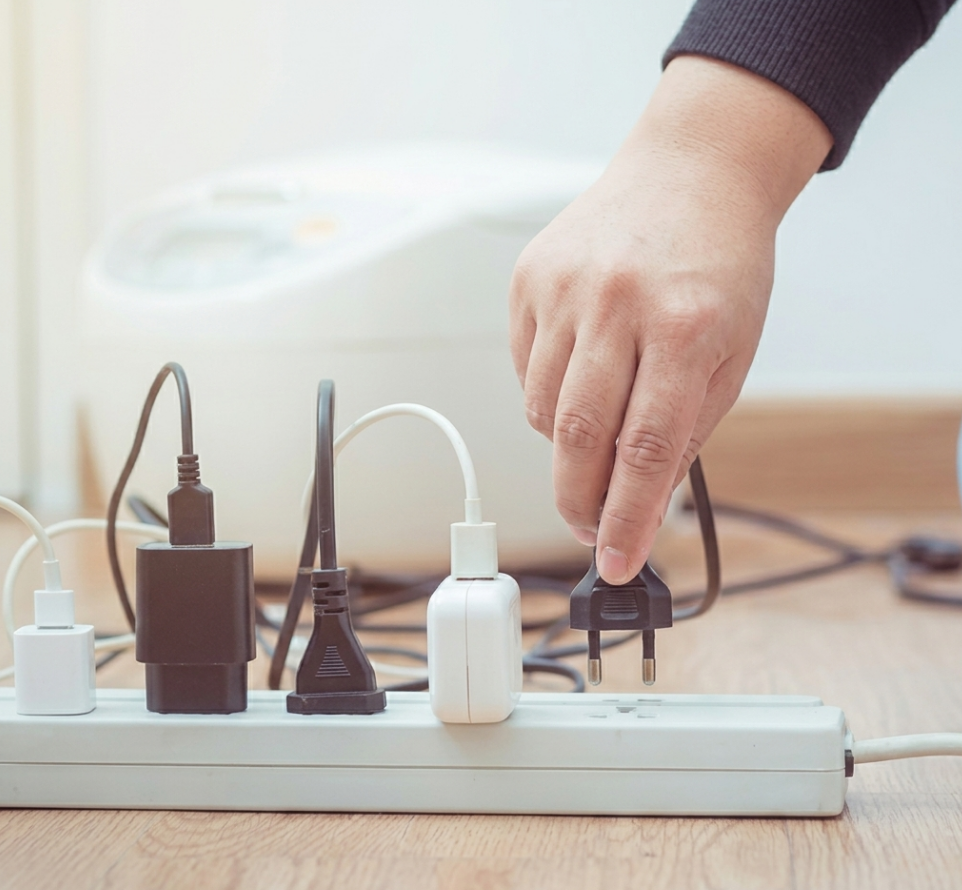
It is worth distinguishing this from plug-in surge protector power strips. Most homeowners are familiar with those strips that plug into the wall and provide multiple outlets. They can help protect individual devices from smaller, localized surges.
But a power strip cannot stop a larger surge from entering your home through the main electrical system. A whole-home surge protector acts as a first line of defense by managing larger incoming voltage spikes before they reach the rest of your system. The two work well together, but you need the whole-home device to address surges at the source.
The Benefits of Whole-Home Surge Protection
Installing whole-home surge protection offers a few clear benefits. The most direct one is protecting what you have already invested in. Appliances and electronics are expensive to repair or replace. Adding surge protection reduces the risk of damage during electrical disturbances and can also help reduce wear from smaller, repeated surges over time.
Whole-home surge protectors also support overall electrical safety by diverting excess voltage away from the panel and household circuits, which can reduce the likelihood of damage to your home's electrical system as a whole.
Opt for Professional Installation
Because whole-home surge protectors are installed at the electrical panel, professional installation matters. A licensed electrician can make sure the device is installed correctly and matched to your home's specific electrical system.
The size of your home and the number of electronics and appliances you use can affect which type of surge protector makes the most sense. Our electricians can walk you through factors like surge current capacity and clamping voltage. For homes with a lot of sensitive electronics, a lower clamping voltage can provide a higher level of protection.
Some surge protection devices also include status indicators, such as an LED light that shows whether the device is operating normally. If that indicator signals a problem, it is time to call for service.
Expert Surge Protection Installation in Greensboro, NC
Mister Sparky® offers expert surge protection installation for Greensboro and the surrounding Piedmont Triad area. We can also help with electrical installation, replacement, repair, and inspection needs. Contact us today to schedule a service consultation with one of our experienced electricians.