

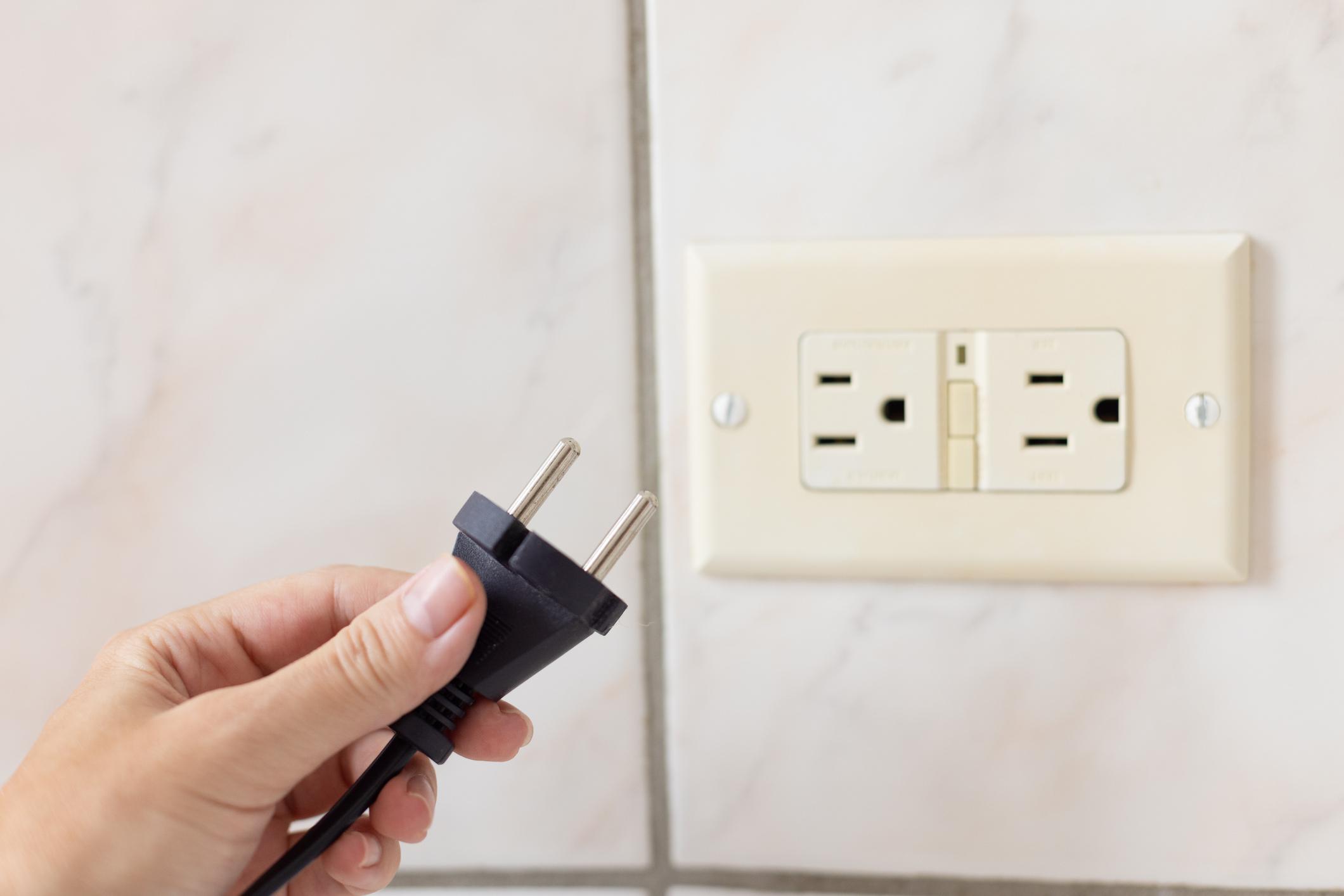
If your home still has two-prong outlets, you are living with a piece of electrical infrastructure that predates the modern safety standards most people take for granted. Two-prong outlets were the norm in American homes built before the mid-1960s, and tens of millions of those outlets are still in service today. They deliver power reliably enough that most homeowners never think twice about them. But what they cannot do is protect you from electrical fault conditions that a properly grounded outlet handles automatically.
This article explains exactly what the third prong does, why its absence creates real risk, and what your upgrade options look like.
What Makes an Outlet Grounded or Ungrounded
Every standard outlet has a hot slot and a neutral slot. Electricity travels out through the hot conductor, powers whatever is plugged in, and returns through the neutral conductor. Those two pathways are all you need for a device to function. A two-prong outlet provides exactly that and nothing more.
A three-prong outlet adds a third conductor: the ground wire. That round hole at the bottom of the outlet connects through the building's wiring to the grounding system, which ultimately connects to the earth. The ground wire is not part of the normal current path. It carries no current under normal operating conditions. Its entire purpose is to provide a safe, intentional path for current to travel if something goes wrong inside a device or the circuit.
Understanding why grounding matters provides useful context here. The ground wire in an outlet works hand-in-hand with the grounding electrode at the panel to form a complete safety system. Remove the outlet end of that system, and the protection it provides disappears.
The Real Job of the Third Prong
The scenario that makes grounding essential is not complicated. Imagine a wire comes loose inside a metal-cased appliance and contacts the metal housing. With a properly grounded outlet, the fault current follows the ground wire back to the panel, the breaker detects the abnormal current and trips, and the appliance stops working. Nobody gets hurt.
Without a ground wire, there is no intentional path for that fault current to take. Electricity will find a path to ground regardless, because it always does. That path might be through the appliance's circuitry, destroying sensitive components. It might be through the wiring in your walls, potentially igniting a fire. Or it might be through you, if you touch the appliance while standing on a grounded surface.
The current that flows through a human body in an electrocution event does not need to be large. Levels above 10 milliamps can cause involuntary muscle contractions that prevent a person from releasing what they are holding. At higher levels, cardiac arrest and respiratory failure become possible. A ground wire eliminates this scenario by giving fault current a known, deliberate path that bypasses the human body entirely.
This is also why cutting the third prong off a plug is never a safe solution. The appliance will still work. But you have disabled the safety feature that protects you if a fault develops inside it. The electrical hazards created by ungrounded appliances are not theoretical.
The Problem With Polarized Two-Prong Plugs
Many two-prong plugs are polarized, meaning the two blades are different widths. The wider blade is the neutral, and the narrower blade is the hot. This polarization ensures the switch in an appliance is placed in the hot side of the circuit, so no voltage reaches the device when it is switched off.
Polarized outlets offer one layer of safety compared to unpolarized ones: they ensure the hot and neutral are connected correctly. But polarization is not grounding. An outlet can be correctly polarized and still completely ungrounded. Polarization prevents some shock scenarios related to reversed polarity, but it does nothing to protect against the fault current situation described above.
Cheater Plugs Do Not Actually Help
The three-to-two prong adapter, commonly called a cheater plug or ground lifter, allows a three-prong plug to fit into a two-prong outlet. It does not create a ground connection.
These adapters were designed with a small metal tab intended to be screwed under the outlet cover plate screw. The idea was that the cover screw would connect to the metal outlet box, which would be grounded through the metal conduit back to the panel. In the specific installation conditions that design assumed, it could theoretically create a ground path. In practice, those conditions are rarely met. Plastic electrical boxes have no continuity to ground at all. Metal boxes in older homes may or may not actually be grounded depending on how the wiring was run.
The result is that most cheater plug installations provide no ground connection while creating the appearance of one. You end up with a three-prong plug in an outlet that still has no grounding path, and no visual indication that anything is wrong. The dangers of DIY electrical workarounds apply clearly here: the fix looks like it worked but does not.
How to Tell If Your Three-Prong Outlets Are Actually Grounded
Here is a common and genuinely alarming situation in older homes: a two-prong outlet was replaced with a three-prong outlet at some point, but no ground wire was run to the new outlet. The outlet looks modern and grounded. Three-prong plugs fit into it. Everything seems fine. But the grounding slot is connected to nothing.
This is sometimes called a bootleg ground. It is a code violation and provides none of the protection a properly grounded outlet should.
The only way to confirm that a three-prong outlet is actually grounded is to test it with an outlet tester. A basic three-light outlet tester costs a few dollars and plugs directly into the outlet. The combination of lights that illuminate tells you whether the outlet is correctly wired, reversed in polarity, or ungrounded. If you have any three-prong outlets in an older home that have never been professionally verified, testing them is worthwhile. The electrical safety checklist is a good place to start a systematic audit of your home's outlet condition.
Who Has Ungrounded Outlets?
Grounding requirements for residential wiring evolved over several decades. Ground wires began appearing in some homes in the 1940s and 1950s but were not consistently required until around 1962 to 1971 depending on local code adoptions. Any home built before that period is a candidate for having largely ungrounded outlets, and any home built after that period that has not had its wiring verified may still have some ungrounded outlets if previous work was done incorrectly.
The older home electrical guide covers the full range of issues that commonly appear in pre-1970s electrical systems. Two-prong outlets are often accompanied by other outdated electrical components, including knob and tube wiring, fuse boxes, and undersized service. Getting a complete picture of the system is more useful than addressing one component in isolation.
If you have noticed flickering lights or frequent breaker trips alongside ungrounded outlets, those symptoms can indicate broader system issues that also warrant attention.
Your Upgrade Options
When it comes to upgrading ungrounded outlets, there are three code-recognized approaches with meaningfully different outcomes.
Option 1: Full Rewiring With a Ground Wire
This is the gold standard. A licensed electrician runs a new grounding conductor from the outlet location back to the electrical panel, giving the outlet a proper, complete ground connection. The outlet is then truly grounded, surge protectors work as designed, and the outlet meets every current safety standard.
The trade-off is cost and disruption. Running a new ground wire typically requires opening walls to route the conductor, and the scope of work multiplies quickly if the home has many ungrounded outlets across multiple rooms. For homes with aluminum wiring or other systemic wiring issues, this approach also addresses those problems as part of the same project. For homes considering a panel upgrade at the same time, combining the two projects reduces overall cost and disruption.
Option 2: GFCI Replacement
A GFCI receptacle installed on an ungrounded circuit provides shock protection without requiring a new ground wire. The GFCI monitors current imbalance between the hot and neutral conductors and trips if a fault is detected, protecting people from electric shock in the same way a grounded outlet would.
There are important limitations to understand. A GFCI does not provide an equipment ground. Standard surge protectors still will not work effectively on a GFCI-protected ungrounded outlet, because there is still no grounding conductor to absorb surge energy. The GFCI also does not protect the connected devices from voltage spikes the way a properly grounded outlet does.
When a GFCI is installed on an ungrounded circuit, the NEC requires the outlet to be labeled "No Equipment Ground." This label communicates to anyone using the outlet or working on it in the future that the grounding slot is not connected to a grounding conductor. A GFCI on an ungrounded circuit is a meaningful safety improvement for shock protection, but it is not the equivalent of a fully grounded outlet.
The GFCI outlets service page covers professional installation in locations throughout the home, including older homes where the wiring requires special handling. Understanding the full picture of what GFCI protection provides helps set realistic expectations for this upgrade path.
Option 3: Replace With Another Two-Prong Outlet
This option is technically permitted under the NEC. If an existing two-prong outlet fails or needs replacement, it can legally be replaced with another two-prong outlet. There is no code violation in like-for-like replacement.
This option resolves a malfunctioning outlet without committing to the cost of a full grounding upgrade. It leaves the outlet ungrounded and does not address the safety limitations described in this article. It is the minimum acceptable response, not a recommended long-term solution. If young children are present, pairing this with tamper resistant outlets at least adds a layer of physical protection even if the grounding gap remains.
Signs That Demand Immediate Attention
Ungrounded outlets are a chronic, background risk. The following symptoms represent acute problems that should not wait for a planned upgrade:
- Any shock received when touching an appliance or its metal casing
- Outlets that feel warm or hot to the touch
- Burning smells from an outlet even when nothing is plugged in
- Sparking outlets or visible scorch marks around the outlet slots
- Appliances and electronics that fail prematurely or behave erratically
Any of these symptoms, combined with overloaded circuit signs like frequent breaker trips, may indicate that the wiring itself has broader problems beyond just grounding. All warrant an immediate electrical inspection rather than a planned appointment. Shut off the affected circuit at the panel if you observe signs of burning, scorch marks, or shock, and do not use the outlet until it has been inspected by a licensed electrician.
Ready to Address Ungrounded Outlets in Your Home?
Mister Sparky's licensed electricians assess ungrounded outlet situations, recommend the most appropriate upgrade path based on your home's wiring, and complete the work correctly to code. Whether that means running new ground wires, installing GFCI protection throughout a home, or a combination of both, the team is available 24/7.
Book an appointment or find your local electrician to get started.