

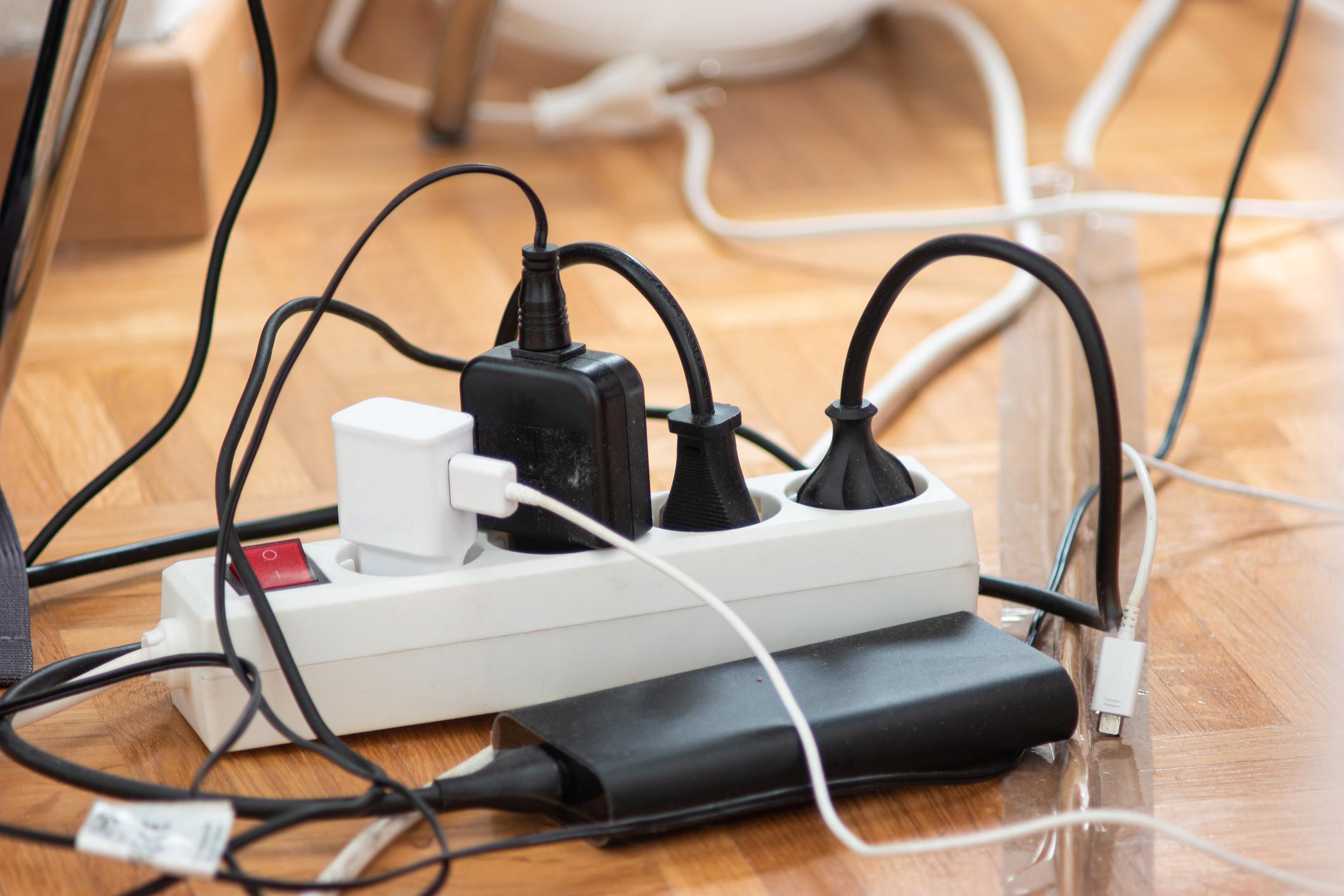
Extension cords are among the most commonly misused electrical items in the home. They are convenient, inexpensive, and seemingly harmless. But the Electrical Safety Foundation International estimates that roughly 3,300 home fires originate in extension cords each year, resulting in 50 deaths and 270 injuries annually. Most of those incidents are preventable with a basic understanding of how cords work, where they can safely be used, and where they cannot.
This guide covers everything homeowners need to know about using extension cords safely, choosing the right cord for each situation, and recognizing when cord use is creating a hazard that a permanent electrical solution should fix instead.
Extension Cords Are Temporary, Not Permanent
This is the most fundamental rule and the one most frequently ignored. Extension cords are designed for temporary use. The National Electrical Code explicitly prohibits using them as a substitute for permanent wiring, and for good reason: continuous use accelerates deterioration in ways that create fire and shock risk.
If you have a cord that has been plugged into the same outlet powering the same devices in the same location for more than a few weeks, it has crossed from temporary use into permanent use. Heavy reliance on extension cords throughout a home is a visible signal that the electrical system lacks sufficient outlets to meet actual needs. The long-term solution is adding outlets where they are needed, not running more cords. Understanding overloaded circuits explains why the underlying load problem matters even when the cord itself appears to be working fine.
Choosing the Right Cord: Gauge, Length, and Rating
Not all extension cords are the same, and using a cord that is undersized for the device it powers is one of the most common causes of cord overheating and fire. Two factors determine a cord's safe capacity: its gauge and its length.
Understanding Wire Gauge (AWG)
The wire inside an extension cord is rated by AWG (American Wire Gauge). The lower the number, the thicker the wire and the more current it can safely carry. This is counterintuitive for most people but critical to understand.
| Gauge | Capacity | Typical |
| 16 AWG | Light duty (~13 amps) | Lamps, phone chargers, small electronics |
| 14 AWG | Medium duty (~15 amps) | Vacuums, computers, power tools (light) |
| 12 AWG | Heavy duty (~20 amps) | Power tools, space heaters, shop equipment |
| 10 AWG | Extra heavy duty (~30 amps) | High-draw equipment, generators, RVs |
Using a 16 AWG cord to power a device that needs a 12 AWG cord forces more current through a wire that cannot safely handle it. The wire heats up, insulation degrades, and the risk of fire increases. Always match the cord's rating to the maximum wattage of the device or devices being powered.
Length Matters Too
Cord length affects capacity in a way most people do not expect. The longer the cord, the higher its resistance to current flow, and the more the voltage drops before reaching the device at the other end. That voltage drop causes connected motors and tools to draw more current to compensate, which generates heat in both the cord and the device.
As a practical rule of thumb, for every 50 feet of cord length, move up one gauge. A 14 AWG cord that safely handles a 15-amp tool at 25 feet may need to be a 12 AWG cord at 100 feet to deliver the same power without dangerous heat buildup. When in doubt, use the shortest cord that reaches and the heaviest gauge the situation calls for. Longer is not safer when it comes to extension cords.
Indoor vs. Outdoor Cords
Indoor and outdoor extension cords are built to different standards and must not be substituted for each other.
Indoor cords have standard PVC insulation designed for dry interior conditions. They are not rated for moisture, UV exposure, temperature extremes, or physical abrasion from outdoor surfaces. Using an indoor cord outside exposes it to conditions that degrade the jacket rapidly, eventually exposing conductors.
Outdoor cords carry a "W" designation in their jacket marking (such as SJTW or SOOW), indicating weather-resistant construction. They have heavier-duty insulation and are rated to handle moisture, sunlight, and temperature changes. An outdoor-rated cord can safely be used indoors, but an indoor cord should never be used outdoors.
For any outdoor use, also use GFCI outlet protection at the source outlet. If the outdoor outlet is not already GFCI-protected, a portable GFCI adapter between the outlet and the cord provides the required protection against shock in wet or damp conditions. This connects directly to what GFCI outlets are designed to do near water and moisture sources.
The Most Dangerous Extension Cord Mistakes
Several common extension cord practices create hazards that are serious enough to warrant specific attention.
- Running cords under rugs or carpet. This is one of the most significant fire hazards in the home. Cord insulation generates heat as current flows through it. Under a rug or carpet, that heat has nowhere to go. Over time, the insulation softens, the wire deteriorates, and the material pressing on the cord can ignite. The rug also hides damage and fraying that would otherwise be visible. There is no safe way to run an extension cord under a floor covering.
- Running cords under furniture. The same heat-trapping problem applies under heavy furniture, with the added risk of physical damage to the cord from sustained pressure. A pinched or compressed cord can also be a sparking hazard at the point of damage.
- Daisy-chaining cords. Plugging one extension cord into another multiplies the resistance in the circuit, creates additional connection points that can arc and overheat, and makes it easy to exceed the current capacity of the weakest cord in the chain. The same problem applies to plugging one power strip into another. Each cord in a chain should be rated for the full load of everything connected at the end of it, and the combined load must not exceed what the outlet can deliver. In practice, if you need two cords to reach, buy one cord of the appropriate length instead.
- Using extension cords with major appliances or heaters. Refrigerators, stoves, washing machines, dryers, air conditioners, and space heaters should always be plugged directly into wall outlets. Major appliances draw sustained high current that exceeds what most extension cords are rated to handle continuously. Space heaters and fans in particular generate enough heat to cause a cord to overheat even when the cord's rating appears adequate, because the rating assumes occasional rather than sustained high-draw use. This type of overuse is connected to the broader issue of electrical fire hazards in the home.
- Routing cords through walls, ceilings, doorways, or windows. Running a cord through any enclosed space is a code violation and a fire risk. Inside a wall or ceiling, heat cannot dissipate and damage is invisible. Doorways and windows pinch and abrade the cord insulation over time, eventually exposing conductors.
- Forcing a three-prong plug into a two-prong adapter or outlet. The third prong connects to the grounding conductor and provides a critical path for fault current. Removing it or bypassing it eliminates that protection and increases the risk of shock if the device or cord develops a fault. Never cut off the ground pin, and never use an adapter to force a three-prong plug into a two-slot outlet unless the circuit is properly protected in another way. Understanding why grounding matters helps explain why removing that third prong creates real risk rather than just a minor inconvenience.
- Securing cords with staples or nails. Any puncture through the outer jacket of a cord can damage the insulation and the conductors inside. Nails and staples are not a safe way to route or secure electrical cords. Use purpose-made cord clips or cable staples that clamp over the jacket without penetrating it.
Proper Handling and Unplugging
How you use and handle an extension cord day to day affects how long it lasts and whether it stays safe.
When unplugging a device or a cord, always grip the plug head itself, not the cord. Pulling the cord body repeatedly fatigues the connection between the wires and the plug terminals, eventually causing internal damage that is not visible from the outside. That internal damage creates resistance at the connection point, which generates heat concentrated in one small area.
When coiling a cord for storage, follow the natural twist of the cable rather than forcing it into tight loops. Overtight bending creates kinks and stress fractures in the insulation over time. Avoid wrapping cords tightly around appliances or furniture legs for the same reason.
Keep cords away from water, snow, and any wet surfaces. Even outdoor-rated cords are not designed for submersion, and water in or around a cord or its connections creates a shock hazard. The dangers of DIY electrical work, including improper cord repairs, apply equally here -- if insulation is compromised, a professional assessment is the safe call.
Signs a Cord Needs to Be Replaced
Extension cords do not last forever, and using a damaged cord is significantly more dangerous than using none at all. Replace any cord that shows:
- Visible fraying, cracking, or splitting of the outer jacket
- Exposed conductors anywhere along the cord length
- Discoloration, melting, or scorch marks at either plug end
- A loose, wobbly connection at the plug or socket
- A missing or bent ground pin on a three-prong plug
- Warmth or heat anywhere along the cord during normal use
- A burning smell when the cord is in use
Never attempt to repair a damaged cord with electrical tape. Tape is not a rated repair method and will not restore the cord's original insulation quality or safety margin. If the cord is damaged, it should be discarded and replaced. A cord that feels warm during use at a load well within its rating is telling you something is wrong internally.
Including an extension cord check in your regular home maintenance routine is a simple habit that catches deteriorating cords before they create a problem.
Cord Organization and Management
Tangled cords are a tripping hazard, and bundled cords can create a heat-trapping problem similar to running them under carpet. A few practical approaches to cord management keep them safe and accessible:
- Route cords along walls and baseboards rather than across open floor space
- Use cord covers or cable raceways in high-traffic areas such as hallways and doorways
- Use purpose-made hook-and-loop ties or cord organizers rather than bundling multiple cords together tightly
- Keep cords accessible so you can inspect them and reach the plug when needed
Cord organization also helps ensure that cords are not accidentally damaged by foot traffic, furniture movement, or pets and children. Cords running through busy areas of the home without protection are subject to the kind of wear that degrades insulation over time in ways that are easy to miss during casual inspection.
For homes with children, extension cord management pairs directly with childproofing electrical safety. Children are naturally drawn to cords, and accessible plugs and loose cord runs create opportunities for both shock and tripping injury.
When the Answer Is More Outlets, Not More Cords
If you consistently need extension cords in the same locations, the right solution is not better cord management. It is additional outlets installed where the load actually exists. Extension cords used as a permanent workaround are a visible signal that the home's electrical system has not kept pace with how the space is actually being used.
Adding outlets in a kitchen, home office, garage, or outdoor area eliminates the cord entirely rather than managing it. New outlets can also be installed with GFCI protection where required, USB charging ports built in, or other features that match current needs. Installing electrical outlets and switches in the right locations removes the fire risk, the tripping hazard, and the code violation that permanent extension cord use creates.
Protecting the outlets themselves from power surges is worth addressing at the same time. Whole home surge protection works alongside proper outlet installation to defend sensitive electronics from the voltage spikes that extension cords provide no protection against. An electrical safety checklist review is a practical way to identify where cord use is currently covering for an outlet gap.
Persistent extension cord use often coincides with flickering lights or breaker tripping -- both signs that circuits are overworked. Adding outlets on circuits that are already at capacity does not solve the underlying problem. A licensed electrician can assess the full picture and recommend whether new outlets, new circuits, or a panel upgrade is the right answer.
Ready to Replace Extension Cords with Permanent Outlets?
Mister Sparky's licensed electricians install new outlets, add circuits, and assess whether your current system can support the load you are putting on it. Whether you need a single outlet added to a bedroom or a whole-home review of where temporary cords have been standing in for permanent wiring, the team is available 24/7.
Book an appointment or find your local electrician to get started.