
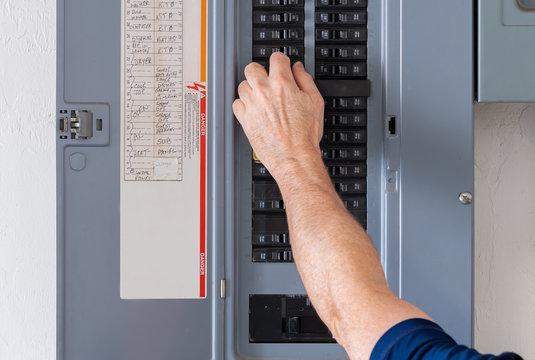
An electrical panel upgrade is a notable investment in your home. Naturally, homeowners want to know what the cost is likely to be.
Folks in West Allis, WI, and other parts of the Milwaukee area can generally expect the price, including parts and labor, to land between $1,500 and $5,000. The difference depends on the complexity of the upgrade, the condition of the existing electrical system, permit requirements, and the demands of the new panel. The price can reach higher than $5,000 for very involved work. Let's take a look at the factors and how they affect the final price tag.
What Affects the Cost of an Electrical Panel Upgrade?
The need for more circuits to support more devices is a major driver of panel upgrades. Modern homes often include high-demand equipment such as central air conditioning, electric dryers, EV chargers, hot tubs, electric ranges, and larger appliance loads. Adding one or more of these devices may require a dedicated circuit, and in some homes, it may also require a larger panel or service upgrade.
Panel Capacity
The price of the panel itself often runs in the low-to-mid hundreds of dollars, but the full cost of the project includes labor, wiring, grounding, permits, inspection, utility coordination when required, and any related code updates. Panel capacity is a major factor, especially as more households add features like EV chargers, electric ovens, and other high-demand equipment.
Many older houses have 60-amp or 100-amp service. In some cases, that may not be enough for the demands of a modern home, especially if you have central air conditioning, electric appliances, or plans to add new equipment.
A 100-amp panel can still be suitable for some smaller homes with modest electrical demands. However, many homeowners choose to upgrade to 200-amp service because it provides more capacity for modern appliances, HVAC equipment, electronics, and future upgrades.
A 200-amp panel is one of the most common residential upgrades because it can better support today’s household electrical needs. Large homes or properties with multiple high-demand loads may need even more capacity. In some cases, a 400-amp service may be considered, but that is typically reserved for larger residences or homes with significant electrical demands.
Wattage and Load Calculations
The electrical demands of devices often appear in watts rather than amps. To understand whether a panel can support a new appliance or circuit, an electrician performs a load calculation rather than simply adding up the numbers printed on the breakers.
Wattage is a function of voltage times amperage. Many household circuits are 120 volts, while larger appliances and equipment, such as electric dryers, ranges, air conditioners, and EV chargers, often use 240 volts.
As a simple reference, service capacity is often estimated this way:
- 100 amps at 240 volts = 24,000 watts
- 200 amps at 240 volts = 48,000 watts
- 400 amps at 240 volts = 96,000 watts
That does not mean your home can safely use every watt of that capacity at all times. Electrical design must account for continuous loads, appliance demand, circuit sizing, breaker ratings, and code requirements.
Each breaker also has its own limits. A 15-amp, 120-volt circuit has a theoretical maximum of 1,800 watts, but continuous loads are generally limited to less than the full breaker rating. A window-mounted air conditioner, space heater, microwave, or electric kettle can draw enough power to trip a 15-amp breaker if other loads are on the same circuit.
It is also important to understand that the total of all breaker ratings in a panel can exceed the main breaker size. That is normal because not every circuit runs at full capacity at the same time. The question is whether the home’s calculated load is appropriate for the service size. If you are adding a central AC unit, EV charger, hot tub, or other major appliance to an older home, you may need a 200-amp upgrade or other electrical improvements.
Labor Costs
The best-case scenario involves replacing a panel where the existing wiring, grounding, and service equipment are in good condition. More complex projects cost more. The more circuits a house has, the more work the electrician has to do. The electrician must remove the old panel, install the new one, reconnect the circuits, label the breakers, test the system, and make sure the work meets applicable electrical code requirements.
Circuits and Wiring
Bear in mind that panel upgrades often lead to circuit upgrades. If you are adding a new circuit or increasing a circuit’s amperage, the wiring must be properly sized for that circuit. You cannot simply install a larger breaker on wiring that is not rated for the added load. The electrician also has to verify grounding, bonding, breaker compatibility, and overall safety.
Local Permit Costs
Most municipalities require a permit for an electrical panel upgrade. This is an additional cost, payable to your local government. Permit and inspection requirements vary by city, so West Allis, Milwaukee, and nearby communities may have different processes or fees. Our electricians can help coordinate the work so it aligns with local requirements.
Does the Cost of an Electrical Panel Upgrade Make Sense?
An electrical panel upgrade is an investment in protecting your house and supporting your electrical needs. You are protecting valuable property, appliances, electronics, and your family. An outdated, overloaded, damaged, or improperly installed electrical panel can create safety risks and may damage expensive equipment.
One scenario where a full panel upgrade might not be necessary is if your existing panel still has enough capacity, enough breaker space, and is in good condition. For example, if you already have a 200-amp panel with available capacity and open breaker spaces, the simpler solution may be to add the needed circuit.
At Mister Sparky®, we recommend having any lower-capacity, outdated, or frequently overloaded panel professionally evaluated. You may want to consider an upgrade if your house has a 100-amp or lower service and you are adding major electrical loads or experiencing signs that your system is struggling.
Major Electrical Upgrades
A major electrical upgrade frequently requires a panel evaluation. An EV charger, hot tub, electric range, workshop, or large addition can place a significant new load on your electrical system. Adding power to a detached garage, finished basement, or workshop may also require new circuits, a subpanel, or a service upgrade, depending on the existing system.
No More Slots
Even if the existing panel still has amperage capacity, it may run out of physical breaker spaces. In some cases, an electrician may be able to use approved tandem breakers if the panel is designed for them and local code allows it. In other cases, the safer and more practical solution is to install a larger panel or add a properly installed subpanel.
Adding Another Panel
One alternative is to add a subpanel. Sometimes, you will see this on properties with detached garages, workshops, additions, pools, or guest houses. A subpanel does not add more electrical capacity by itself, but it can provide additional breaker space and make it easier to serve a specific area of the property.
A subpanel runs off the main panel and must be sized correctly for the load it serves. It usually sits on a larger feeder circuit, such as 60 amps or more, depending on the project. Before installing one, an electrician has to confirm that the main panel and service can support the added demand.
In some situations, a separate service entrance may be required or preferred, but that is a more involved project. The utility company may need to participate, and costs can increase quickly. In many residential situations, it is more practical to use the current service and install a larger main panel or subpanel where appropriate.
Professional Installation
A licensed electrician should handle your electrical panel upgrade. Panel work involves high-voltage service equipment, grounding and bonding requirements, utility coordination, permits, inspections, and code compliance. DIY work can create serious safety risks and may cause issues with inspections, insurance claims, or future home sales.
The good news is that the team at Mister Sparky® in Brew City is here to help. We offer service to customers throughout the Milwaukee area. We offer an on-time guarantee and a 100% satisfaction guarantee. You can also rely on us for straightforward pricing, so you know what to expect before work begins. We answer 24/7, including emergency dispatch.
Trust your work to a licensed, insured, and locally based electrician. Contact Mister Sparky® in Brew City today to discuss an electrical panel upgrade in West Allis or elsewhere in the Milwaukee area.