
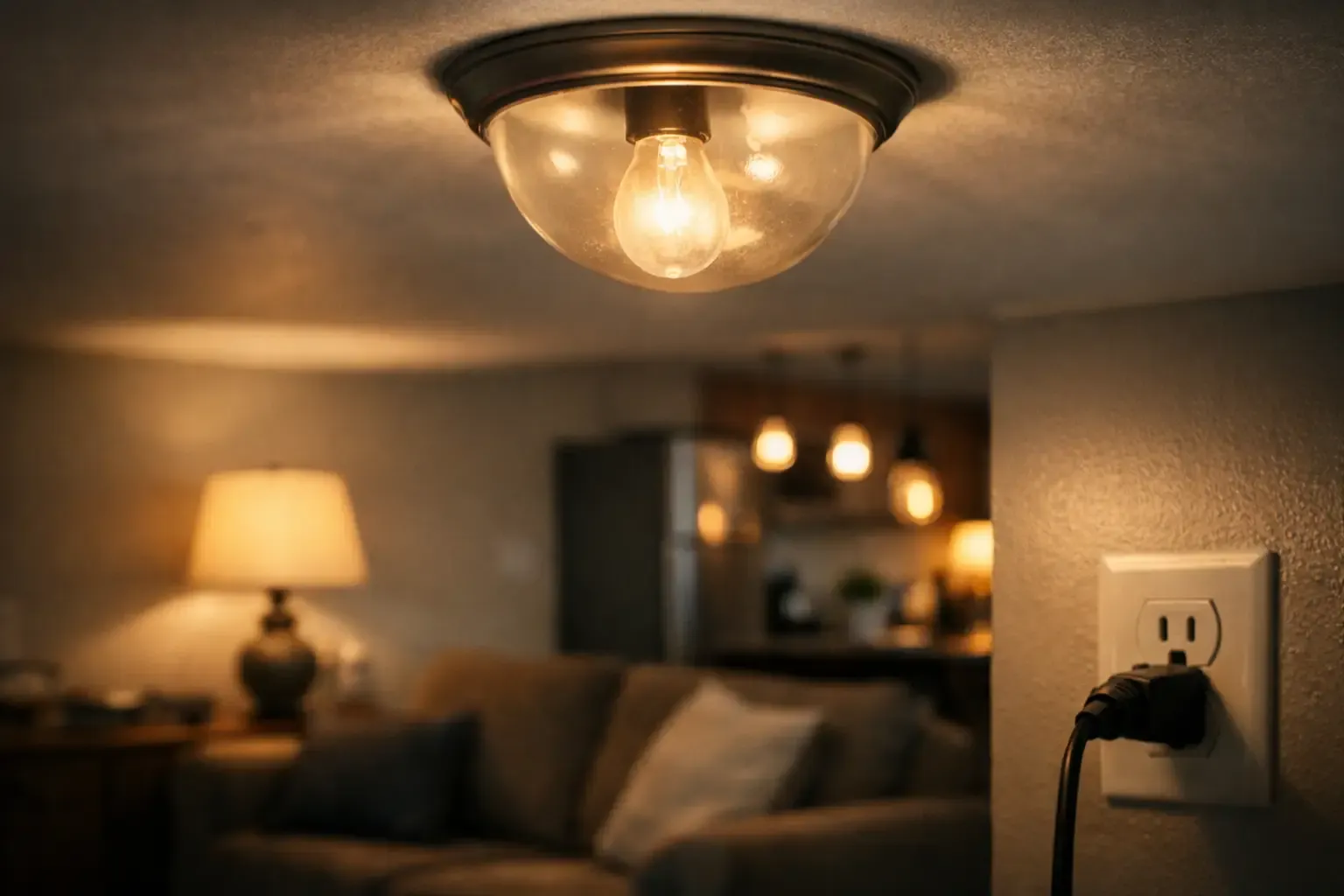
Why are lights flickering in your house? Learn common causes, warning signs, and when to call a licensed electrician for a safe repair.
You flip on the kitchen light, and it gives a quick flutter before settling down. Later, the dining room fixture dims for a second when the AC kicks on. If you're asking why are lights flickering, you're right to pay attention. A flicker can be something minor, but it can also point to loose wiring, overloaded circuits, or a bigger electrical problem that should not be ignored.
Some flickering is harmless. Some is an early warning. The key is knowing the difference so you can protect your home, your appliances, and the people living in it.
Why are lights flickering in one room or throughout the house?
The pattern matters. If one lamp flickers, the problem may be simple. If multiple lights flicker at once, especially in different parts of the house, that usually means the issue is deeper in the electrical system.
A single flickering light often comes down to the bulb itself, a loose connection at the fixture, or a faulty switch. LED bulbs can also flicker if they are paired with an incompatible dimmer. That is annoying, but not always dangerous.
Whole-house or multi-room flickering is where homeowners need to be more cautious. That can point to service connection issues, a failing breaker, a worn electrical panel, or loose wiring somewhere behind the walls. In older homes around Salisbury and nearby communities, outdated wiring and aging panels are common contributors.
Common reasons lights flicker
One of the most common causes is a loose bulb. It sounds obvious, but it happens all the time. If the bulb is not fully seated in the socket, the electrical contact can be inconsistent, which creates that irritating blink or shimmer.
Another frequent cause is a failing light switch or fixture connection. Over time, wiring terminals can loosen, especially in fixtures that get used often or have been replaced more than once. A bad connection can create intermittent power loss. That is not something to brush off, because loose electrical connections can generate heat.
Appliances can also play a role. If your lights dim or flicker when the refrigerator starts, the HVAC system runs, or a microwave turns on, the circuit may be experiencing a temporary voltage drop. A slight momentary dip can be normal when large appliances draw extra current at startup. But if the flicker is frequent, strong, or worsening, the circuit may be overloaded or the panel may not be distributing power properly.
Then there is the dimmer issue. Many homeowners upgrade to LED bulbs but keep older dimmer switches that were designed for incandescent lighting. The result is often a persistent flicker, especially at lower brightness settings. In that case, the fix may be as simple as using compatible bulbs and controls. Still, it helps to have an electrician confirm that the problem is compatibility and not wiring.
When flickering lights are a warning sign
Not every flicker means danger, but some definitely do.
If lights are flickering alongside buzzing outlets, warm switch plates, a burning smell, or breakers that trip repeatedly, stop treating it like a nuisance. Those signs can point to loose conductors, arcing, or overloaded equipment. That is a safety issue.
You should also take flickering seriously if the lights brighten and dim unpredictably. Dimming is one thing. Lights getting brighter than normal can suggest a voltage problem, which can damage electronics and appliances. If that happens in more than one area of the house, the issue may involve the neutral connection or even the utility service.
Another red flag is flickering that starts after storms or power surges. North Carolina weather can be rough on electrical systems. A surge may damage breakers, fixtures, or sensitive devices, and the effects are not always obvious right away. If the flickering starts after bad weather, it is smart to have the system checked before the problem turns into a bigger repair.
Why are lights flickering when an appliance turns on?
This is one of the most common questions homeowners ask, and the answer depends on how much the lights flicker and what kind of appliance is involved.
Large appliances like air conditioners, heat pumps, refrigerators, and washers need a burst of power when they start up. A slight, brief dimming can happen even in healthy systems. That does not automatically mean something is wrong.
What is not normal is a strong or repeated flicker every time the appliance runs, especially if multiple rooms are affected. That can mean the appliance is sharing a strained circuit, the panel is overloaded, or the electrical service is not keeping up with the home's demand. Homes with added equipment such as EV chargers, hot tubs, or newer HVAC systems can outgrow older panels faster than people realize.
If your home is older and has never had a panel upgrade, flickering under load may be one of the first clues that your electrical system needs attention.
Older homes and outdated electrical systems
Many homes have electrical systems that were built for a different era. Decades ago, families did not have as many electronics, large kitchen appliances, entertainment systems, chargers, and smart devices running at once. Even if the wiring was acceptable when the house was built, it may not be a good match for how the home is used now.
That is why flickering lights show up so often in older homes. Aluminum wiring, worn receptacles, aging breakers, and undersized panels can all contribute. Sometimes the issue is isolated to one connection. Other times, flickering is one symptom of a system that needs a broader update.
This is also where DIY guesswork becomes risky. Replacing a bulb is one thing. Opening a panel or trying to trace loose wiring without the right training is another. Electrical problems can hide behind walls and inside equipment that still appears to work. That is why professional diagnosis matters.
What an electrician looks for
A good electrician does more than swap out a part and hope for the best. The goal is to identify the real source of the flicker.
That usually starts with a few practical questions. Is the flickering happening in one fixture or several? Does it happen only at certain times of day? Is it tied to the AC, dryer, or microwave? Did it start after a storm, renovation, or new appliance installation?
From there, the inspection may include checking the fixture, switch, circuit connections, breaker performance, panel condition, service entrance components, and voltage behavior under load. If the problem is isolated, the fix may be straightforward. If it traces back to a failing panel, damaged wiring, or a service issue, you want to know that sooner rather than later.
At Mister Sparky® Salisbury, this kind of troubleshooting is about more than getting the lights to stop flickering. It is about making sure the repair is safe, clear, and done right the first time.
What you can check before calling
There are a few safe observations homeowners can make without taking anything apart. Try tightening the bulb if it is loose. Notice whether the flickering happens with one fixture, one room, or several areas of the house. Pay attention to whether it lines up with the use of major appliances.
You can also check whether the bulb type matches the fixture and dimmer. A mismatched LED setup is a common cause of flicker. If replacing the bulb with a known compatible one solves the issue, great. If not, that tells you the problem likely goes deeper.
What you should not do is ignore recurring flickering, remove panel covers, or attempt wiring repairs yourself. If there is any sign of heat, smell, buzzing, sparking, or breaker problems, it is time to bring in a licensed electrician.
When to call right away
Call for professional help immediately if lights are flickering across multiple rooms, breakers are tripping, outlets feel warm, or you notice a burning odor. The same goes for visible sparks, buzzing from the panel, or lights that get unusually bright. Those are not wait-and-see issues.
Even if the problem seems small, persistent flickering is worth checking out. Electrical issues rarely fix themselves. More often, they get worse in the background until the repair becomes more expensive or the hazard becomes harder to ignore.
A steady light should be the norm in your home. If it is not, trust what your house is telling you. Getting it checked now is a simple step that can prevent bigger trouble later.