
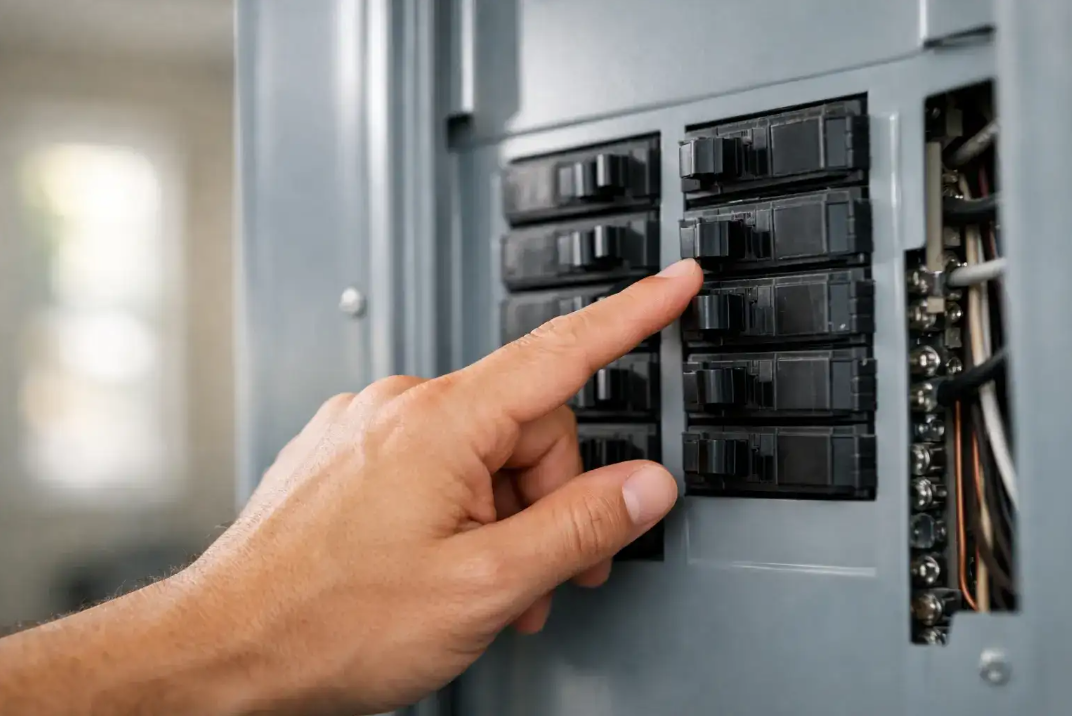
The lights go out in one room, the microwave stops, and suddenly you are standing in front of the electrical panel wondering what to do next. If you are trying to figure out how to reset a tripped breaker safely, the first thing to know is simple - a breaker usually trips for a reason, and forcing it back on without checking a few basics can make a small issue much bigger.
A tripped breaker is not just an inconvenience. It is a safety device doing its job. Breakers shut power off when a circuit is overloaded, when there is a short circuit, or when a ground fault is detected. That quick shutoff helps protect your wiring, appliances, and home from overheating and fire risk. So yes, you may be able to reset it, but you should do it carefully and pay attention to what the breaker is telling you.
How to reset tripped breaker safely step by step
Start by turning off or unplugging anything that was running on the affected circuit. If a space heater, toaster oven, hair dryer, or window AC was on when the power went out, leave it off for now. This reduces the load on the circuit and gives you a better chance of seeing whether the trip was a one-time overload or a deeper electrical problem.
Next, go to your [electrical panel](https://www.mistersparky.com/clearwater/about-us/blog/2022/october/what-is-a-main-panel/) and open the door. Use a flashlight if the area is dim, but avoid balancing lamps or extension cords in a way that creates another hazard. Stand on a dry floor, make sure your hands are dry, and do not touch exposed wires or anything inside the panel besides the breaker handle itself.
Find the breaker that tripped. It may not look fully off. In many panels, a tripped breaker sits in the middle position between on and off, or it may appear slightly out of line with the others. If the panel labels are accurate, they can help you identify which circuit lost power. If they are not, that is common in older homes, so take your time.
To reset the breaker, push it firmly all the way to the off position first. This step matters. Many breakers will not reset unless they are fully switched off before being turned back on. Then move it firmly back to the on position.
If it clicks into place and stays on, wait a moment before plugging devices back in. Bring things back one at a time. If the breaker trips again as soon as you turn on a certain appliance, that appliance may be the problem. If the breaker trips with nothing plugged in, the issue is more likely in the wiring, the receptacle, or the breaker itself.
When resetting a breaker is safe - and when it is not
There is a difference between a normal overload and a warning sign you should not ignore. Resetting a breaker is generally reasonable if the circuit was clearly overloaded. Maybe too many kitchen appliances were running at once, or a vacuum and space heater were sharing the same line. In that case, reducing the load and resetting the breaker may solve it.
It is not safe to keep resetting a breaker repeatedly to see if it will hold. If it trips again right away, stop. A breaker that will not stay on is telling you there is an active electrical fault. That could mean damaged wiring, a failing breaker, a shorted outlet, or an appliance that should be unplugged and checked.
There are also situations where you should skip the reset attempt and call a licensed electrician right away. These include a burning smell near the panel, scorch marks, buzzing sounds, a breaker that feels hot, visible corrosion, water near the panel, or signs that the panel itself is outdated or damaged. Get It Done Right. Get It Done Safely. Electricity is not the place to guess.
What if the breaker keeps tripping?
If the same breaker trips more than once, the cause matters. An overloaded circuit is one possibility, especially in older homes that were not designed for today’s power demands. Bedrooms, living rooms, and home offices often end up sharing circuits with TVs, gaming systems, chargers, heaters, and more than the original wiring was ever meant to handle.
But overloads are only one piece of the puzzle. Repeated trips can also point to loose connections, worn insulation, arc faults, faulty GFCI or AFCI protection, or a panel that is no longer performing reliably. Sometimes the problem is hidden inside a wall or at a single damaged outlet. Other times, the breaker itself has become weak and is tripping when it should be replaced.
That is why repeated trips are worth taking seriously. The goal is not just getting the power back on. The goal is making sure your home is still protected.
Common mistakes homeowners make
One common mistake is assuming the tripped breaker itself is the whole problem. In many cases, the breaker is the messenger, not the cause. Replacing or forcing a breaker without diagnosing the reason it tripped can leave the real hazard in place.
Another mistake is resetting a breaker while appliances are still running. If the original trip happened because of too much electrical load, putting the circuit right back under strain can make it trip again immediately.
Homeowners also sometimes overlook partial power loss. If a room has [some outlets working and others dead](https://www.mistersparky.com/wilmington/about-us/blog/2021/december/emergency-electrician-explained-top-causes-of-partial-power-outages-wilmington-nc/), or if lights flicker before the breaker trips, that could indicate a loose connection or more serious wiring issue. Those symptoms deserve attention even if the breaker does reset.
And then there is the panel itself. If your home has an older electrical panel, limited breaker space, or signs of past patchwork repairs, a tripped breaker may be part of a bigger system issue. That is especially true in aging homes around Salisbury and nearby communities, where electrical systems may have been modified over decades to keep up with added appliances and renovations.
How to tell whether it is an overload or a fault
Sometimes the pattern gives you the answer. If the breaker trips only when multiple high-wattage devices are used together, overload is likely. Hair dryers, microwaves, portable heaters, irons, and air fryers are frequent culprits. Spreading those devices across different circuits can help.
If the breaker trips the moment you reset it, or after plugging in one specific device, the problem may be a short circuit or ground fault. You might also notice a spark, a pop, or a faint burning odor. In that case, leave the device unplugged and do not continue testing on your own.
If tripping seems random, that can be harder to pin down. Intermittent wiring faults, moisture intrusion, or a breaker beginning to fail can all create unpredictable behavior. Random electrical problems are frustrating because they come and go, but they are not something to shrug off.
How to reduce the chances of another trip
You cannot prevent every breaker trip, but you can lower the odds. Be mindful of what is sharing each circuit, especially in kitchens, bathrooms, garages, and older living areas. Avoid relying heavily on power strips for permanent setups. If you regularly need extension cords or outlet splitters to make a room functional, your home may need additional circuits.
It also helps to know your panel. Clear labels save time during an outage and reduce guesswork during an urgent moment. If your labels are missing or inaccurate, having the panel inspected and properly identified is a smart upgrade.
For homes with frequent electrical demands - EV chargers, workshop equipment, sump pumps, larger HVAC systems, or added outdoor lighting - a panel evaluation may reveal that the system needs more capacity. Sometimes the safest answer is not another reset. It is a repair, circuit addition, or [panel upgrade](https://www.mistersparky.com/services/electrical-panels/panel-upgrades/) that brings the system in line with how you actually use your home.
When to call a pro for a tripped breaker
If you reset the breaker once, reduce the load, and everything runs normally, you may be in the clear. If the breaker keeps tripping, feels loose, smells hot, will not stay set, or if you are not fully sure what caused it, it is time to bring in a licensed electrician.
Mister Sparky® Salisbury helps homeowners track down the real cause of breaker trips, from overloaded circuits to hidden wiring issues and failing panels. Fast answers matter when your home safety is involved, and so does clear pricing before the work begins.
A breaker tripping once can be a nuisance. A breaker tripping again is a message. Listen to it, handle the reset carefully, and if anything feels off, do not put up with any malarky - get it checked before the next trip becomes a bigger problem.