
Key Takeaways About Halloween Electrical Fires
Halloween electrical fires refers to fires started by lights cords outlets or moisture during seasonal decorating. This summary is for homeowners and property managers preparing displays or troubleshooting hazards while decorating.
- Identify overloaded outlets frayed cords and warm faceplates quickly
- Prevent moisture exposure with weatherproof covers and elevated connections.
- Avoid daisy chaining extension cords and overloading single circuits.
- Spot burning smells flickering lights and discolored outlet faces immediately.
- Reduce risk by choosing outdoor rated lights and LED fixtures.
- Plan for professional inspection when breakers trip repeatedly or damage exists.
Introduction
Halloween decorations can transform a home quickly, but they also increase the risk of halloween electrical fires when lights, extension cords, and outlets are misused. Strung lights, inflatables, and battery chargers may hide frayed cords or overloaded circuits. Moisture from rain or dew can turn a festive display into a shock or fire hazard. Homeowners should take visible risks seriously because fires spread fast and often at night.
Overloaded outlets and damaged extension cords are common ignition sources in seasonal displays. Faulty strings of lights can develop short circuits that trip breakers or overheat wiring. Outdoor decorations expose connections to moisture that can corrode contacts and create ground faults. In Myrtle Beach, SC properties with humid fall evenings need extra caution around outdoor power use.
Many fires start quietly from hidden wiring problems behind decorations or inside window displays. Smell, heat, or flickering lights often precede a dangerous event and should not be ignored. A burning plastic or hot insulation odor is a clear warning that something is wrong. For homeowners in Conway, SC a quick response to these signs can prevent property loss and injury.
Recognizing hazards early helps decide whether a simple change or a professional inspection is necessary. Licensed electricians can test outlets, check circuit breakers, and inspect junction boxes for damage or overload. They can also recommend safer lighting and placement to reduce risk. Taking precautions now helps keep celebrations safe and prevents halloween electrical fires from turning tragic.

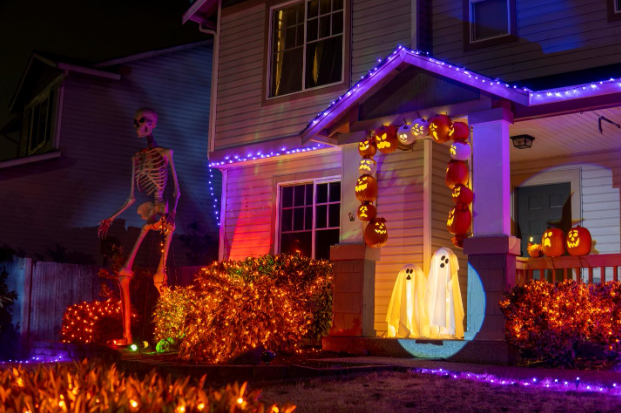
Photo from iStock - Credit: Michele Ursi
How Halloween Electrical Fires Start with Lights
How Halloween lights can start fires refers to overheating, shorting, or arcing in decorative electrical setups.
- Poor connections can cause arcing and heat.
- Old bulbs raise current draw and temperature.
- Damaged insulation exposes live conductors.
- Indoor-rated lights used outdoors can fail.
Strings of lights heat when many sets plug into one outlet and overload a circuit breaker.
Frayed wiring or crushed cords can create a short that sparks inside insulation or near fabric decorations.
Faulty sockets or loose bulb bases increase resistance and produce hot spots that often precede smoke or burning odors.
When homeowners ask whether a light string can ignite a display, the answer is yes, especially with damaged cords, poor connections, or wet contacts.
Overloaded Outlets and Extension Cord Hazards
Plugging many decoration strings into a single receptacle can push a circuit past its safe load and create heat at the outlet or in the wiring. Extension cords also add failure points where plugs and sockets meet, and repeated bending or stepping on cords damages insulation over time. A common homeowner mistake is running cords under rugs or through doorways, which crushes conductors and hides hotspots until insulation fails. In Myrtle Beach, SC humid conditions can worsen cord degradation when outdoor cords are not rated for wet use or are left exposed.
Using multiple power strips or daisy-chaining extension cords increases resistance and can make plugs warm to the touch. Loose connections at the strip or outlet introduce arcing that slowly charred plastic and raises fire risk without tripping a breaker. GFCI-protected outlets reduce shock risk but may not prevent overheating inside a wall or at a junction box. For Conway, SC properties, homeowners should avoid modifying cords or creating permanent connections from temporary decoration wiring.
Inspect cords before each use by looking for cracks, exposed wires, melted insulation, and stiff spots that indicate internal damage. A simple voltage reading or visual check at the outlet can reveal loose fit or burn marks that signal past overheating. Professionals often perform a load calculation on the circuit and continuity tests on suspect cords to confirm safe operating conditions. If an outlet shows burn discoloration or a breaker trips repeatedly, stop using that circuit and schedule an electrician to inspect the panel and associated wiring.
When planning a display, distribute the load across multiple circuits and use extension cords rated for the combined wattage of decorations. Outdoor-rated cords and weatherproof connections prevent moisture-related failures and reduce the chance of shorts that start fires. Consider using LED decorations which draw less current and run cooler than incandescent bulbs for large setups. If you notice warm outlets, flickering lights, or scorch marks, stop use and contact a licensed electrician for diagnosis and repair before resuming decorations.
Damaged Decorations and Why It Happens
Decorations suffer damage from repeated storage, pets, and foot traffic that crushes wires and weakens insulation over time. Small nicks or pinches in cord jackets may not show immediately but allow moisture and dirt to reach conductors. Heat from nearby lights or heaters accelerates breakdown of plastic insulation, making cords brittle and more likely to crack. Inspecting cords for stiffness, soft spots, or exposed copper helps catch hidden damage before use.
Poorly made or counterfeit decorations can use thin conductors and low-quality sockets that fail under normal loads. Connectors that fit loosely create resistance and localized heating at the plug or socket, which darkens plastic and weakens contacts. Repeatedly changing bulbs or forcing mismatched bulbs into sockets increases stress on wiring and can deform bases. Choosing products marked by recognized testing labs reduces the chance of manufacturing defects that later cause failures.
Physical strain at connection points is a common failure location where insulation pulls back and terminals become exposed. Running cords through tight gaps or around sharp edges cuts insulation and may nick conductors, which later short when moved. Inflatables use internal fans and lights that flex cords near strain points and raise the chance of wire fatigue. Securing cords with strain reliefs or using cable clips reduces movement and lowers the risk of hidden damage developing.
Pests and wildlife sometimes chew or nest around stored decorations, creating unseen hazards before the season starts. Rodent damage often leaves small bite marks that expose conductors and lead to arcing once power is applied. Before installing, spread out decorations and examine seams, plugs, and junctions for chew marks or nesting material. If you find gnawed wires or melted plastic, stop using the item and consult a licensed electrician to evaluate live wiring and possible repairs.
Moisture Exposure and Wet Weather Risks
Wet conditions increase risk when plugs, sockets, or light strings are left exposed to rain or heavy dew during fall evenings. Water can bridge contacts and create ground faults that trip or bypass protections. Outdoor-rated fixtures reduce this risk but still require proper sealing at connection points. Inspect enclosures and cord entry points for gaps before powering a display.
- Keep plugs off the ground.
- Use weatherproof covers on outlets.
- Seal splices with appropriate enclosures.
- Unplug decorations during storms.
Pooling water around an outlet or junction box often signals a harmful path for electricity and needs immediate attention. A corroded terminal may show green or white deposits and cause intermittent faults or heat. If you see discoloration or feel warmth at an outdoor receptacle, stop use and have it tested. Homeowners in Conway, SC should avoid using affected circuits until inspected.
Professionals diagnose moisture-related issues by visual inspection and simple tests like voltage readings and continuity checks. They may use a moisture meter to find damp insulation or an infrared camera to spot hot spots behind panels. A written report helps track repairs such as replacing GFCI outlets or installing weatherproof covers. After repairs, retesting confirms the circuit operates safely before decorations return to service in Myrtle Beach, SC.
Recognizing Warning Signs of Electrical Problems
Watch for persistent tripping of a breaker or GFCI when decorations are on, since repeated trips can indicate a wiring fault. A breaker that trips without a clear overload may point to intermittent shorting or arcing in hidden wiring. Professionals confirm this by measuring current with a clamp meter and testing for leakage to ground. If breakers trip only with seasonal items connected, unplug those items and avoid reusing that circuit until inspected.
Noticeable heat at an outlet faceplate, plug, or junction box deserves immediate attention because heat often means resistance or poor connections. Discoloration, melted plastic, or a loose-fitting plug are signs of contact resistance and potential arcing. An electrician will open the outlet or panel to inspect terminal tightness, perform voltage drop and continuity tests, and check for damaged conductors. Small heat increases can escalate quickly when load cycles change during evening use of decorations.
Strange smells, such as plastic burning or metallic ozone, often precede visible problems and should never be ignored during setup or while displays run. Smell complaints paired with intermittent flicker can indicate arcing at a socket, loose wire, or failing component in a string of lights. A diagnostic process includes isolating circuits, swapping suspect fixtures, and using infrared scanning to locate hot spots behind coverings. Homeowners in Conway, SC should unplug displays and call a professional if these odors persist.
Intermittent power loss in a single fixture or pattern of lights suggests poor connections, water intrusion, or a failing transformer in larger displays. Professionals will check connections, test for moisture with a moisture meter, and inspect inline transformers for overheating or corrosion. They often document findings in a written report and recommend repairs such as replacing GFCI outlets or repairing junction boxes. For properties in Myrtle Beach, SC, prompt diagnosis helps prevent small faults from becoming Halloween electrical fires.
Simple Prevention Steps for Safer Decorations
Start by selecting decorations and lights labeled for their intended use and that carry a recognized safety mark. Keep cords straight and avoid tight bends where conductors can fatigue or break. Position plugs so they remain visible and easy to disconnect if heat or unusual smells appear. The NFPA Halloween Fire Safety Tips also offer helpful guidance on keeping decorations away from heat sources and reducing fire hazards around the home. A quick visual inspection each evening can catch new damage before it becomes a hazard.
Limit how many items share a single outlet and spread loads across different circuits when possible. Use LED strings and low-wattage fixtures to reduce current draw and heat at connections. Route cords away from walkways and sharp edges to prevent abrasion and accidental crush points. Secure connectors off the ground using hooks or hangers to reduce moisture exposure during wet weather.
Protect outdoor connections with approved weatherproof covers and seal splices inside rated enclosures to keep moisture out. Avoid running indoor-rated lights outside, since their insulation and sockets may fail when damp. If an outlet or extension feels warm while decorations run, unplug everything and leave the circuit off until checked.
Document your setup with photos and note which circuit each display uses so professionals can diagnose problems faster. A licensed electrician will perform load checks, inspect AFCI and GFCI protection, and test outlets with a voltage reading and continuity test. If repairs are recommended, schedule them before rehanging decorations to avoid repeat risk. After fixes, retest circuits and keep a written record of any measurements or observations for future South Carolina seasons.
When Homeowners Should Call a Professional
If you notice persistent sparking, visible arcing, or smoke near decoration wiring, stop using the outlet and call a licensed electrician in Myrtle Beach, SC right away. These visible faults often point to failing connections, loose terminals, or damaged conductors that need hands-on diagnosis. An electrician will de-energize the circuit and inspect the outlet, junction box, and associated wiring for thermal damage. Promptly scheduling service reduces the chance that a hidden fault becomes a Halloween electrical fires emergency.
- Repeated breaker trips under normal load need evaluation.
- Warm or discolored outlet faces should be inspected.
- Burning or plastic odors require immediate attention.
- Water intrusion into outdoor outlets warrants testing.
- Damaged cords or exposed conductors must be assessed.
If lights or a transformer emit unusual heat during normal operation, have a professional perform a load and continuity check. Technicians use a clamp meter, voltage reading, and infrared scan to locate high-resistance points and hot spots behind finishes. They may open the panel to check terminal tightness and inspect AFCI or GFCI devices for proper function.
When decorations cause intermittent outages that resist simple fixes, a full diagnostic helps find the root cause instead of guessing. A typical inspection includes isolating circuits, testing outlets with a voltage meter, and examining junction boxes for moisture or corrosion. If repairs require replacing receptacles, upgrading protection, or fixing wiring, schedule them before reusing the circuit. Homeowners in Conway, SC should avoid temporary fixes and rely on a professional report for safe resolution in Myrtle Beach, SC.
Postfire Actions and Electrical Inspection Checklist
After a fire, secure the area and avoid re-energizing affected circuits until they are inspected by a professional. Photograph visible damage including charred outlets, melted insulation, and scorch marks for documentation and insurance purposes. A licensed electrician will perform live and dead inspections to determine safe next steps and may lock out the panel during assessment. Do not attempt to repair wiring yourself when insulation or terminals show heat damage.
An inspection checklist typically starts with checking the service panel for tripped or damaged breakers and signs of overheating at bus bars. Technicians will inspect affected receptacles, junction boxes, and any inline transformers for loose terminals, melted plastic, or corrosion using voltage readings and continuity tests. They often use an infrared camera to find hidden hot spots behind finishes and a clamp meter to verify circuit loads under decoration conditions. Written findings should note measurements and recommended repairs for your records.
After repairs, confirm that GFCI and AFCI protection operate correctly and that outlet faceplates and covers are intact and secured to prevent future moisture intrusion. Professionals will test grounding conductors and bonding connections and perform a load calculation if you plan to restore heavy decorative loads. Request a final pass with voltage readings under normal decoration loads to ensure no overheating reoccurs before reconnecting displays. Keep the technician's report for future reference and insurance claims.
For homeowners in Conway, SC arrange inspections promptly if fire involved exterior connections or moisture suspected to have played a role. If circuit faults affected shared living spaces in Myrtle Beach, SC hired the best electrical contractors to verify all living-area outlets and switches are safe before reuse. When in doubt, follow professional advice to replace any suspect cords, fixtures, or outlets rather than attempting temporary fixes yourself. A clear, logged inspection helps prevent repeat Halloween electrical fires and supports safer seasonal decorating.