Adding New Circuits to Your Home: When and Why You Need Them
You just installed a new window air conditioner in your home office, and now every time it kicks on, the room's lights flicker. Perhaps a space heater in the bedroom trips the breaker whenever you're running the hairdryer at the same time. These irritating symptoms signal your home's electrical system is overloaded and struggling to keep up with demand.
The solution for these issues is likely a new circuit installation. Understanding when and why you need additional circuits helps you make informed decisions about your electrical capacity and protect your family from hazards.
Understanding the Building Blocks of Your Electrical System
Your home's electrical circuits work as closed loops that allow electricity to flow from your main panel to outlets and appliances. Each circuit has a maximum capacity measured in amperes, and when devices draw more power than this capacity, safety mechanisms trigger or hazards develop.
Think of home electrical capacity like a highway. Each circuit is a lane, and each appliance is a car. Too many cars in one lane create a traffic jam. An overloaded circuit behaves the same way — too many devices cause slowdowns, backups or dangerous overload conditions.
There are two main types of circuits. A general-purpose circuit powers multiple outlets in a room for lamps, phone chargers and televisions. A dedicated circuit serves a single high-power appliance that requires its own dedicated power source, such as a refrigerator or a central air conditioning unit.
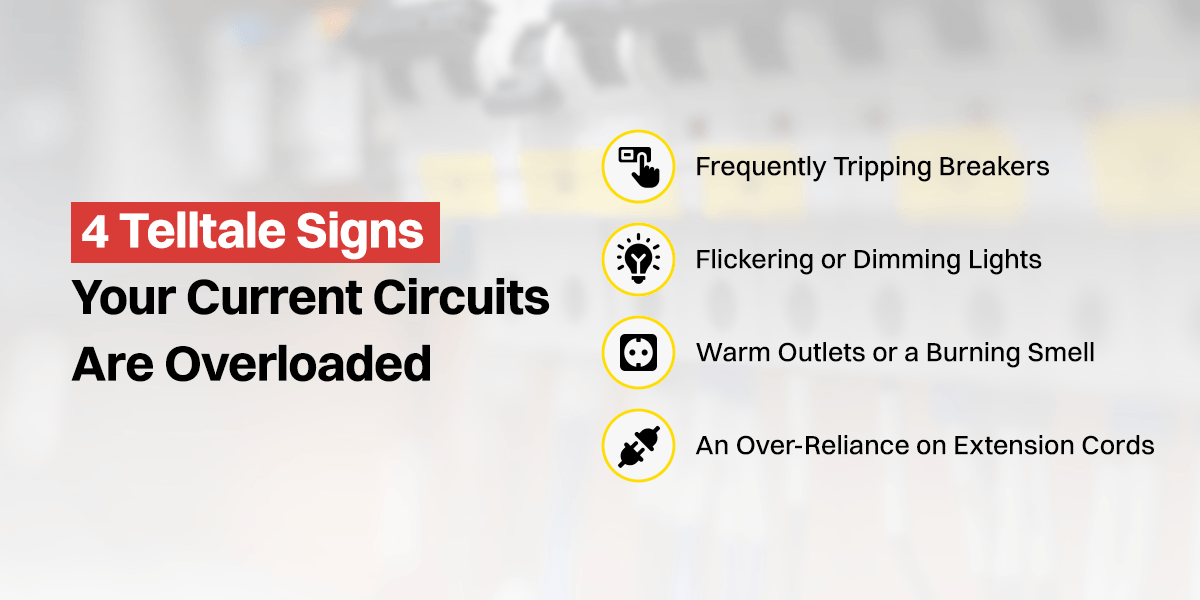
4 Telltale Signs Your Current Circuits Are Overloaded
These warning signs indicate that your circuits are struggling to meet demand and that it's time to consider professional electrical repairs and possibly adding more capacity.
1. Frequently Tripping Breakers
A circuit breaker system is a safety device designed to shut off power when a circuit becomes overloaded, preventing wires from overheating and causing fires. If a breaker trips once due to an unusual surge, that's normal protection at work. However, when the same breaker trips repeatedly in a specific area of your home, it signals a persistent problem.
Frequent trips mean the circuit is regularly exceeding its safe capacity. A new circuit and circuit breaker installation helps solve this by distributing the load across multiple pathways.
2. Flickering or Dimming Lights
When lights flicker or dim as soon as a large appliance kicks on, it indicates the appliance is drawing more power than the circuit can provide. This symptom is especially common in older homes where multiple rooms share a single circuit. Adding dedicated circuits for high-draw appliances eliminates this problem and ensures stable power delivery.
3. Warm Outlets or a Burning Smell
This is the most serious warning sign and demands immediate attention. If an outlet feels warm or you detect a burning smell near an outlet, switch or your electrical panel, you're facing a potential fire hazard. These symptoms indicate overheated wiring caused by excessive current or deteriorating connections.
Contact a licensed electrician immediately to assess the situation. Lessening the load by installing new circuits is often the solution.
4. An Over-Reliance on Extension Cords
If you're relying on multiple power strips and extension cords because you lack outlets, the electrical layout is insufficient. While extension cords are fine for temporary use, relying on them permanently creates fire hazards. Daisy-chaining power strips can create an overload risk due to the devices' combined draw.
Adding new circuits with properly placed outlets eliminates the need for extension cords and creates a safer electrical system.
Common Projects That Require New Circuits
Beyond reacting to overload symptoms, many home projects require expanding your electrical system before work begins. Planning for new circuit installation ensures upgrades meet code requirements and function safely.
Major Kitchen and Bathroom Remodels
Modern kitchens and bathrooms have higher power demands than older homes were designed for. Today's kitchens feature multiple high-wattage appliances, including microwaves, dishwashers and electric ranges. Building codes require multiple dedicated circuits for kitchen appliances and at least two 20-amp circuits for countertop outlets.
Bathrooms have similar requirements, especially if you have heated floors or high-powered styling tools. Any remodel you're planning should include an electrical assessment.
Installing High-Demand Appliances
Certain appliances require their own dedicated 240-volt circuit for safe operation. If you're planning to install any of these high-demand devices, add a new circuit before installation:
- Electric vehicle chargers: Installing an EV charger typically requires a dedicated 240-volt, 40 to 50-amp circuit for Level 2 home charging stations.
- Hot tubs and spas: Heating water demands dedicated circuits of 50 amps or more.
- Central air conditioning systems: Starting up and running the electrical load for these systems need dedicated circuits.
- Electric dryers: Powering the heating elements safely in these devices usually requires 240-volt, 30-amp circuits.
- Electric water heaters: Providing power for both tank and tankless models demands dedicated high-amperage circuits.
Home Additions, Workshops and Outdoor Power
Building an addition, finishing a basement or converting a garage inherently expands your electrical needs. These projects call for adding circuits for lighting, outlets and appliances. Depending on the demand, you may need a subpanel, which is a secondary panel that receives power from your main panel.
Workshops and sheds with power tools also need dedicated circuits. Table saws, air compressors and welding equipment all draw substantial energy. An electrical panel upgrade or subpanel installation ensures these spaces have adequate, code-compliant power.
Why Using a Licensed Electrician Is Essential for Electrical Work
While some home projects suit DIY enthusiasts, electrical work does not. Improper installation can threaten lives, property and financial security.
Critical Risk of Electrical Fires and Shock
The National Fire Protection Association reports that electrical distribution and lighting equipment failures were the third-largest contributor to home fires and the top cause of direct property damage between 2019 and 2023.
Many of these problems stem from improper wiring, incorrect wire gauge or failed connections. Trained electricians understand proper wire sizing, grounding requirements and protocols that protect your family.
The National Electrical Code (NEC) and Local Permits
The National Electrical Code establishes minimum safety standards for electrical installations. Beyond national standards, cities and counties enforce their own permit and inspection requirements. The local electrician you choose must navigate your jurisdiction's permitting process and ensure your installation passes inspection.
During every installation, electricians follow comprehensive safety protocols. Key checks include:
- Proper circuit sizing: Circuits must be appropriately sized for their intended load and won't exceed safe capacity.
- Secure connections: All wire connections must be tight, correctly terminated and secure against loosening over time.
- Adequate grounding and bonding: Proper grounding prevents shock hazards and meets safety requirements.
- Protection device testing: All protection devices must function correctly and trip when needed.
- Wire condition inspection: All wire insulation must be undamaged and properly rated for the installation environment.
These safety checks protect the home from the most common causes of electrical fires and failures.
Trust the Experts at Mister Sparky of Greenville for Safe Circuit Installation
When your electrical system shows signs of strain, having your installation completed by a licensed and insured company is the safest solution. A circuit panel upgrade ensures your home can meet modern demands while complying with all safety codes.
Mister Sparky is a nationwide company, but we're locally owned and operated in Greenville. Our electricians understand South Carolina's electrical codes, giving you assurance that your installation meets all local requirements. We offer StraightForward Pricing® with no hidden fees and punctual service — we're on time, every time.
Whether you're adding electrical circuits in Greenville, SC, or need emergency electrical services in one of the surrounding areas, we're available 24/7. We back our work with a five-year satisfaction guarantee (restrictions apply).
Call us 24/7 at 864-807-9224 or through our online booking form today for safe circuit installation that delivers you peace of mind.