
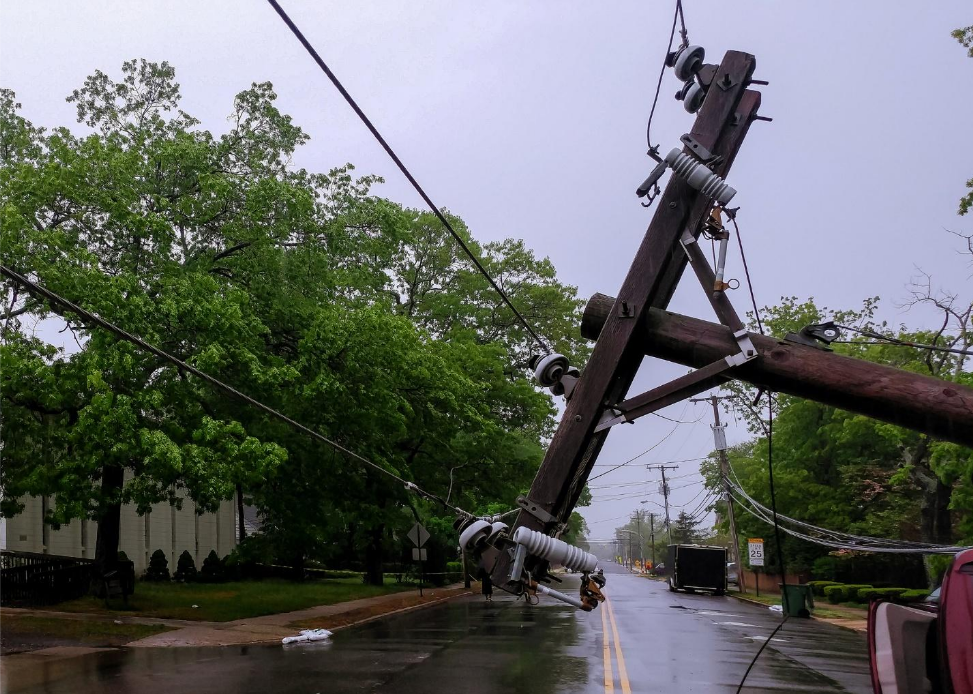
Key Takeaways About Power Lines and Poles
This article explains how storms damage overhead electrical infrastructure and create safety risks. It is for homeowners and property managers who need to recognize dangers after wind rain or impact events.
- Identify leaning poles cracks or exposed hardware after storms.
- Prevent debris and loose items from striking pole equipment.
- Avoid touching downed wires or approaching sparking equipment.
- Spot sagging conductors buzzing or burning smells near equipment.
- Reduce erosion and direct runoff away from pole bases.
- Plan professional inspections and document damage with photos.
Introduction
Storm winds, falling trees, lightning, flooding, and airborne debris can break or pull down power lines and poles. When poles fail, wires can sag, snap, or fall into yards and streets. That damage often causes outages that last hours or days. For homeowners, the result can be more than dark rooms, it can create serious electrical hazards.
Wind-driven tree limbs commonly tear through service lines and crossarms on utility poles. Lightning strikes can char poles, damage insulators, and cause sudden conductor failures. Floodwater can undermine pole bases and wash away soil that supports poles. In coastal areas like Kure Beach, NC, salt air can also accelerate hardware corrosion.
Downed power lines and damaged poles increase fire and shock risks near homes and driveways. You might hear buzzing, see sparking, or notice flickering lights before a failure becomes visible. Appliance damage and tripped breakers often follow while repairs wait for crews. For properties in Wilmington, NC, long outages can disrupt medical equipment and home businesses.
Understanding how each storm element affects power lines and poles helps prioritize safe responses and repairs. Visible damage, unusual sounds, or standing water around pole bases are warning signs to report. A professional inspection will confirm hazards and identify structural failures needing urgent attention. If you suspect a live or fallen line, contact your utility or a licensed electrician immediately.
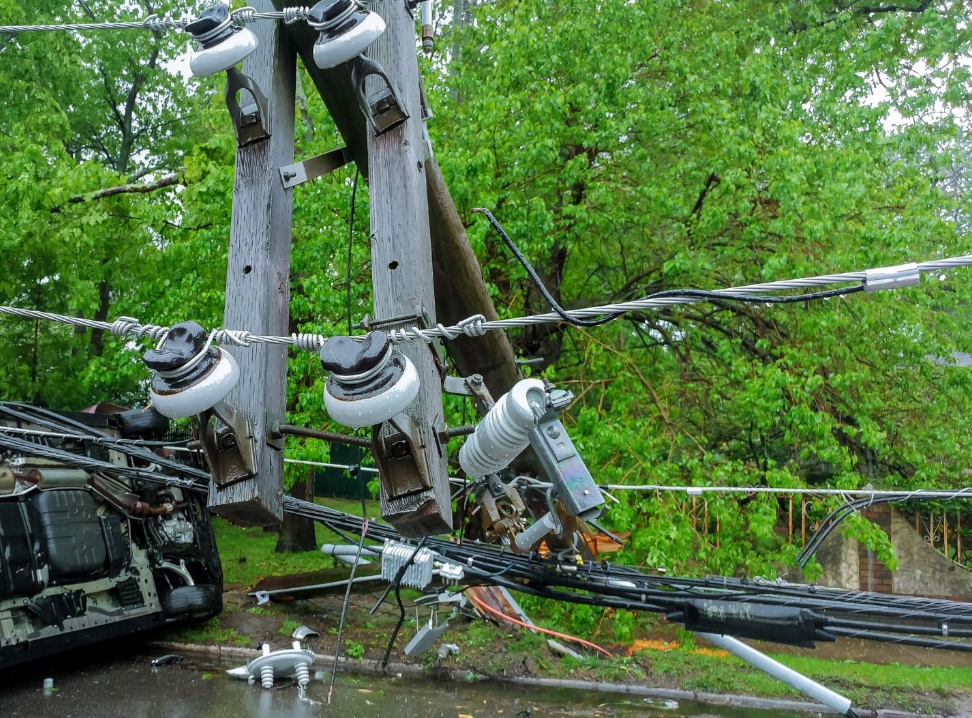
Photo from iStock - Credit: photovs
How Wind Forces Damage Power Lines and Poles
Wind forces refer to how gusts and sustained winds stress power lines and poles, bending or twisting components until they fail.
- Gusts can sway conductors and increase tension.
- Sustained winds cause fatigue in pole materials.
- Winds can move tree limbs into lines.
- Directional gusts can torque crossarms and hardware.
Strong gusts make power lines and poles oscillate, which increases wear at attachment points and insulators. Homeowners often ask whether wind alone can topple a pole, and the answer is yes when wind combines with preexisting damage or soil loss. Inspectors look for leaning poles, cracked crossarms, and frayed conductor clamps to confirm wind-related damage. A licensed electrician or utility crew will check conductor tension and the condition of the GFCI and grounding conductor near the service drop.
Wind-driven vibration can loosen bolts and fatigue wood or composite poles over time, eventually causing cracks or splits. Visible symptoms include creaking noises, sagging wires, and new gaps around pole bases. Professionals confirm the problem using visual inspection, a pull test at anchor points, and photos or written reports for the utility.
High winds often coincide with other hazards that worsen damage, such as saturated soil or falling limbs from nearby trees. In a common situation, homeowners hear loud snaps and then see a sudden tilt in a pole, prompting them to call the utility. Technicians will test voltage at the service panel and examine the junction box and insulators to rule out energized hazards.
Why Falling Trees Cause Structural Pole Failures
When a tree trunk or major limb strikes a utility pole, the impact can crack or split the pole’s core and shear hardware attachments. Cracks reduce the pole’s ability to carry vertical loads and create new entry points for moisture and insects. Inspectors look for visible splits, displaced crossarms, and crushed insulators to determine whether the pole lost structural capacity. A damaged grounding conductor or loosened bolts at the impact zone often signals urgent replacement is needed.
Heavy trees can pull on conductors as they fall, transferring lateral loads into the pole and twisting it out of alignment. That twisting can strip bolt threads, warp crossarms, and fracture composite or wood fibers inside the pole. Professionals diagnose this by measuring pole lean, checking bolt torque, and taking photos for a written report to the utility. They also test continuity of the grounding conductor near the service panel to confirm grounding integrity.
Root damage and soil disturbance from an uprooted tree change how a pole bears weight and resists tipping forces during subsequent storms. A pole that previously sat securely can begin to tilt gradually as supporting soil compacts or erodes. Technicians will probe soil around the base and perform a pull test at anchor points to confirm foundation loss.
Falling trees often damage multiple components at once, including crossarms, insulators, conductor clamps, and nearby secondary service wires. That combined damage increases the chance of conductor contact with vegetation or the ground, creating shock and fire hazards near homes. Visible charring or melting on hardware indicates high-energy contact and needs immediate professional attention. If you suspect structural failure, contact the utility or a licensed electrician in Wilmington, NC for an inspection and written findings.
How Lightning Strikes Affect Conductors and Equipment
A lightning strike can send a massive current through conductors, vaporizing metal at contact points and creating explosive forces that shatter insulators. That sudden energy can weld or melt conductor clamps and damage junction boxes, leaving exposed live parts that pose shock risks to anyone nearby. Technicians inspect charred components and measure continuity of grounding conductors with a multimeter to confirm where current traveled. Homeowners may notice a sharp bang or a flash near the pole when this happens.
Strikes can also induce transient overvoltages that damage transformers and service equipment attached to poles, causing internal faults that later fail under load. Evidence includes blown transformer bushings, oil leaks, and tripped circuit breakers at the service panel after the storm. A professional will record voltage readings and inspect the transformer tank and insulators for punctures or tracking.
Lightning often follows or creates pathways of least resistance, such as damaged insulation or wet surfaces on equipment, increasing the chance of secondary arcing to nearby metal or vegetation. That arcing can leave burn patterns on crossarms and scorch marks on pole tops that indicate high-energy transfer. Inspectors use visual checks, infrared scans when safe, and written reports to locate heat-damaged connections and compromised insulation. In a common situation, homeowners hear continual buzzing after a storm and should avoid the area until a qualified electrician inspects the service drop.
After a strike, specialists check grounding continuity, test insulation resistance on conductors, and examine circuit breakers and junction boxes for signs of internal damage. Diagnosis includes voltage readings at the service panel and photographic documentation for the utility or insurer. If testing shows degraded insulation or failed grounding, replacement of affected hardware and a formal inspection report are typical next steps.
How Flooding Undermines Pole Foundations and Safety
Floodwater removes supporting soil around pole bases and can expose the buried portion of wooden or concrete poles, reducing lateral resistance to wind and load. Saturated soil loses cohesion and bearing capacity, so poles may begin to tilt or settle under normal line tension. You might notice new gaps, pooled water near the base, or sudden leaning after heavy rains. If standing water reaches hardware, it can also accelerate corrosion on bolts and grounding connections.
- Soil erosion exposes pole bottoms.
- Scouring removes compacted fill material.
- Saturated soil reduces lateral support.
- Debris jams change water flow around poles.
- Corrosion increases when metal stays wet.
Inspectors look for exposed fiber in wooden poles, cracks in concrete poles, and loosened anchor bolts during flood assessments. A professional will probe soil around the base, measure pole lean, and take photos for a written report to document erosion. They may also check the grounding conductor continuity and the condition of nearby junction boxes for water intrusion. Homeowners should avoid touching any equipment standing in water and report obvious damage immediately.
Flooding can undermine guy anchors and buried splices, letting lateral forces pull conductors down toward the ground or structures. When guy wires fail, conductors can shift tension and create new contact points that cause arcing and outages. Technicians confirm these issues with a visual inspection, a pull test on anchors, and voltage readings at the service panel when safe to do so. In a common situation, homeowners see sagging lines after a storm and should keep clear while notifying the utility.
Saltwater from storm surge speeds corrosion on metal hardware, reducing service life and increasing failure risk at load points. For properties in Kure Beach, NC and nearby areas, that corrosion combines with erosion to make pole foundations less reliable during subsequent storms. A licensed electrician or utility crew will recommend replacement when inspection shows lost section modulus or compromised grounding. If you observe exposed pole wood, rusted bolts, or muddy washouts near a pole, contact your utility or a qualified professional for evaluation.
How Airborne Debris Creates Electrical Hazards and Breaks
Fast-moving debris like roofing shingles, siding, and loose fencing can slice or abrade conductors, damaging insulation and creating short circuits. Strikes from blown objects often nick protective jackets or sever neutral and grounding conductors near attachment points, producing sparks and intermittent faults. Homeowners may hear sharp bangs or see brief arcs on exposed lines before a full failure, which increases fire and shock risk near yards. A professional would inspect cut marks, measure insulation resistance with a megohmmeter, and document damaged conductor sections for repair.
Debris impacts can also fracture porcelain or polymer insulators, letting energized conductors contact the pole or crossarm and cause sustained arcing. Damaged insulators sometimes show chipping, glazing, or brown tracking paths that indicate repeated flashover events. Technicians check insulator condition visually and use a continuity test across suspect fittings before recommending replacement.
When light debris lodges into hardware, it can bridge phase conductors or create conductive paths during wet conditions, especially when small metal fragments remain unnoticed. That concealed bridging often shows as unexplained tripped breakers or localized burning smell inside junction boxes after storms. A licensed electrician will open enclosures, inspect terminal blocks, and use voltage readings to locate inadvertent connections. In a common situation, a homeowner reports a persistent burning odor and an electrician finds metallic debris inside a splice causing arcing.
Airborne debris can also damage pole-mounted transformers and service equipment by denting casings or clogging vents, which reduces cooling and accelerates failure. Observed symptoms include humming, oil seepage, and overheating detected by infrared scans when safe to perform. Professionals will record thermal images, test transformer windings, and prepare a written report for the utility or insurer.
Warning Signs of Imminent Power Lines and Poles Failure
Look for sudden changes in pole angle or a new pronounced lean that develops quickly after a storm event. Visible cracks or long splits near the crown or groundline often mean internal decay or fiber failure. A nearby humming or buzzing that changes pitch when you walk closer can indicate arcing or loose hardware under load. If you notice scorch marks at insulator seats or repeated sparking during damp conditions, treat it as urgent.
Loose or missing bolts, fallen crossarm pieces, and broken guy strands are mechanical warning signals that a pole may fail under normal tension. Rotten wood fragments at the base or a hollow sound when tapped suggest the pole may lack core strength. Detectable corrosion on metal hardware, clamps, or transformer mounts shortens service life and raises collapse risk near attachment points. Homeowners who smell hot insulation or burning near pole equipment should avoid the area and notify the utility immediately.
Rapidly sagging conductors or new, uneven wire heights over driveways and sidewalks show that tension balance changed and a failure could be imminent. Intermittent outages, repeated breaker trips, and flickering lights during gusts often mean a compromised conductor or failing splice. A professional diagnosing the issue will take voltage readings at the service panel, test grounding conductor continuity, and photograph damaged components for a formal report.
Standing water pooling at the base after flooding or visible soil loss around the pole indicates reduced foundation support and higher overturn risk. Professionals will probe soil, measure pole lean in degrees, and perform a pull test on anchors to confirm instability. In a common situation, homeowners notice a new gap at the base and creaking sounds during wind, prompting an inspection that records loosened anchor bolts and compromised grounding. Residents near coastal areas like Kure Beach, NC should report any exposed pole wood or wet hardware immediately to the utility for evaluation.
When to Call a Professional for Power Lines and Poles
If you see a downed conductor touching the ground, keep everyone back and call the utility immediately for help. Do not touch the wire or attempt to move vegetation near it, because contact can cause fatal shocks. While waiting for crews, note nearby hazards like standing water, metal fences, or vehicles that could become energized. A licensed electrician should inspect the service drop and meter area before power is restored to your home.
- Obvious sparking or flames at pole hardware.
- New, rapid leaning of a pole after a storm.
- Repeated outages tied to a single pole.
- Visible cracks that expose internal wood or concrete.
- Transformer oil leaks or strong burnt smells.
If you notice frequent arcing or a persistent buzzing near lines, call a professional right away to prevent escalation. An electrician will perform voltage readings at the service panel and check grounding conductor continuity to locate energized faults. They may coordinate with the utility for live-line work or power interruptions needed for safe repairs. Keep pets and children away until a qualified crew confirms the scene is safe and de-energized.
A professional inspection is also warranted after any pole strikes by vehicles or heavy equipment, even if damage seems minor at first glance. Inspectors will document physical damage, measure pole lean, and test anchor and guy wire integrity before recommending replacement. For homeowners in Kure Beach, NC report impacts promptly because coastal conditions can worsen hidden damage quickly. In Wilmington, NC call your utility and arrange an electrician inspection when you notice changes in wire height or equipment condition.
Preventive Steps Homeowners Can Take Before Storms
Trim trees and remove dead limbs at least a week before forecasted storms to reduce failures near power lines and poles. Hire an arborist to prune branches that could fall into service drops or crossarms. Keep clearance from wires by focusing on limbs within the service easement or near the meter and junction box. Document the pruning with photos to show proactive steps if a utility inspection becomes necessary.
Secure loose outdoor items like patio furniture, trash bins, and temporary fencing so wind-driven debris cannot strike conductors or pole equipment. Store small objects indoors and anchor larger items to fixed points away from overhead lines. Check roof edges and gutters for loose materials that could lift and become airborne during gusts. Replace or fasten any siding panels that might detach and strike pole-mounted hardware during a storm.
Protect vulnerable pole bases and nearby soil by directing roof runoff away from the foundation to limit erosion that can reduce lateral support. Install splash blocks or grade the ground so water disperses rather than pooling at the pole base. After heavy rain, inspect visually for new soil loss or exposed wood and report significant erosion to the utility.