
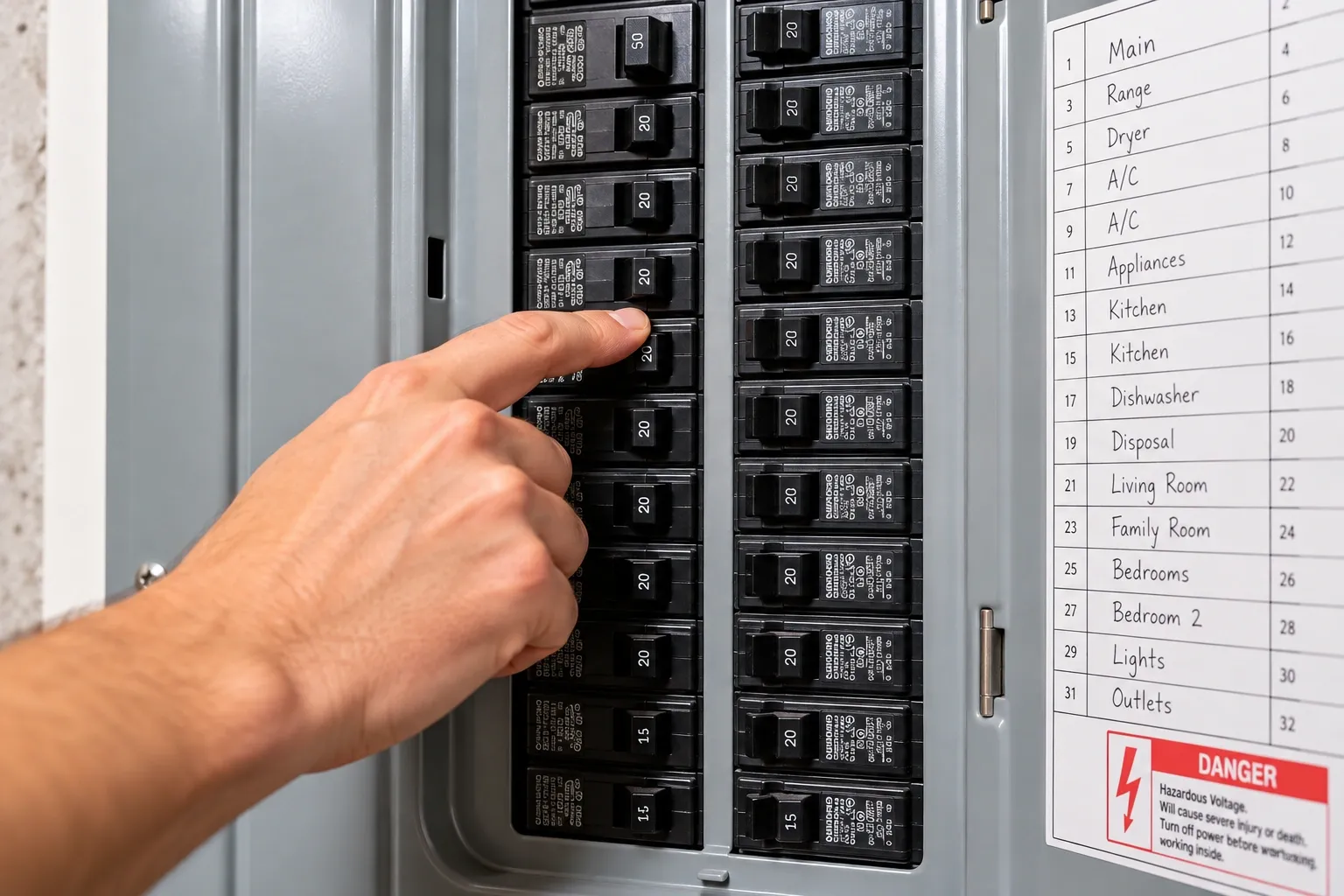
When a circuit breaker trips, it can be frustrating, especially when you’re trying to use your appliances, cook dinner, or just relax at home. However, a tripped breaker isn’t necessarily a sign that something is seriously wrong. In many cases it is doing exactly what it is designed to do: protect your home from electrical hazards.
Understanding why your circuit breaker keeps tripping can help you recognize when a simple adjustment may solve the problem and when it’s time to call a professional electrician.
For homeowners in Salisbury, North Carolina, knowing the common causes of tripped breakers is an important part of maintaining a safe and reliable electrical system.
What Does It Mean When a Circuit Breaker Trips?
A circuit breaker is a safety device that automatically will interrupt the flow of electricity when it detects an issue, such as an overloaded circuit or a short circuit. This prevents your home's wiring from overheating and minimizes the risk of electrical fires.
If a breaker trips one time, it may be responding to an issue that is temporary. However, if the same breaker trips repeatedly, it is worth investigating the cause rather than continually resetting it.
Here are seven common reasons your circuit breaker may keep tripping.
Your Circuit Is Overloaded
One of the most common causes of a circuit breaker tripping is an overloaded circuit. This happens when too much electrical demand is placed on a single circuit.
For example, running a toaster, microwave, and a coffee maker on the same kitchen circuit may give more power than the circuit can safely handle. Space heaters and other high-power appliances are also top contributors to overloads.
What you can do: when the circuit is overloaded, try unplugging and turning off some devices on the affected circuit. If the breaker is no longer tripping after the load is reduced, an overload may have been to blame.
If the problem continues and you regularly run out of electrical capacity, call a licensed electrician and they can evaluate whether your home's circuit needs to be reconfigured or upgraded.
There’s a Short Circuit
A short circuit occurs when electricity takes an accidental path, often because of damaged wiring or a faulty electrical component. Short circuits can cause a breaker to trip quickly and could potentially create dangerous conditions.
Possible warning signs of a short circuit include: a sudden loss of power, a popping sound, a burning smell, or visible damage around an outlet or switch.
What you should do: If you suspect a short circuit, do not continue resetting the breaker or attempting to locate the fault yourself. Leave the circuit off and contact a licensed electrician. If you notice smoke or a fire, go outside and call 911.
An Appliance Is Causing the Problem
Sometimes when a circuit breaker trips, the issue isn’t your homes wiring but a malfunctioning appliance.
A damaged power cord, failing motor, or internal electrical fault can cause a breaker to trip when the appliance is switched on. If this problem consistently occurs when you use one particular appliance, that connection is worth investigating.
What you can do: Stop using the suspected appliance if it appears to trigger the problem. Do not continue testing it if you notice sparks, heat, a burning smell, or damaged wiring.
A licensed electrician can help determine whether the problem involves the circuit, the outlet, or the home's electrical system. The appliance itself may need professional repair.
Your Wiring Is Deteriorating or Damaged
Electrical wiring can deteriorate over time or be damaged by renovations, pests, moisture, or other conditions. Damaged insulations or loose connections can interfere with the safe flow of electricity.
Older homes may also have wiring that needs professional evaluation, especially if homeowners experience recurring electrical issues.
Warning signs of damaged or deteriorating wiring can include: flickering lights, unusual buzzing, warm outlets, discolored wall plates, or breakers that trip without an obvious explanation.
What you should do: Do not remove outlets, open electrical panels, or attempt to repair the wiring yourself. If you suspect damaged wiring, contact a licensed electrician to inspect the system and identify the source of the problem.
There is a Ground Fault
A ground fault occurs when electrical current takes an unintended path to ground. This can happen when damaged wiring or faulty equipment allows electricity to contact a grounded surface.
Ground faults can be especially concerning in areas where electricity and moisture may come into contact, such as kitchens, bathrooms, garages, and other outdoor spaces.
Some circuits and outlets have ground-fault circuit interrupter (GFCI) protection, which is designed to reduce the risk of electric shock by detecting certain electrical imbalances.
What you should do: If a breaker of GFCI device repeatedly trips, do not bypass the protection or continue to reset it without understanding why. A qualified electrician can identify the cause and determine whether repairs are needed
Your Electrical Panel or Breaker Has a Problem
Circuit breakers can wear out or develop faults over time. In other cases, the electrical panel may have a problem that requires professional electrical attention.
A breaker that trips repeatedly under normal loads of electricity, won’t stay reset, or shows visible damage should not be ignored. A breaker that feels unusually hot, makes buzzing or crackling sounds, or produces a burning odor also warrants immediate attention.
What you should do: Do not remove the panel cover or attempt to replace a breaker yourself. Leave the affected circuit off if you suspect a fault and then arrange for a licensed electrician to inspect the panel.
Depending on the findings, the solution may involve repairing a connection, replacing a faulty breaker, or evaluating whether the electrical panel needs an upgrade.
Your Home’s Electrical Demand Has Increased
Your electrical system may have been designed for a smaller number of appliances than you use today. Adding an EV charger, new kitchen appliances, workshop equipment, or other high-demand devices can increase the load on your electrical system.
If your breakers start tripping more frequently after adding new equipment, your home's electrical capacity may need to be evaluated.
What you can do: A licensed electrician can assess your electrical loads, inspect the affected circuits, and determine whether a dedicated circuit, additional capacity, or another solution is appropriate.
A larger electrical panel isn’t always necessary. The right solution depends on your home's existing wiring, panel capacity, and electrical requirements.