
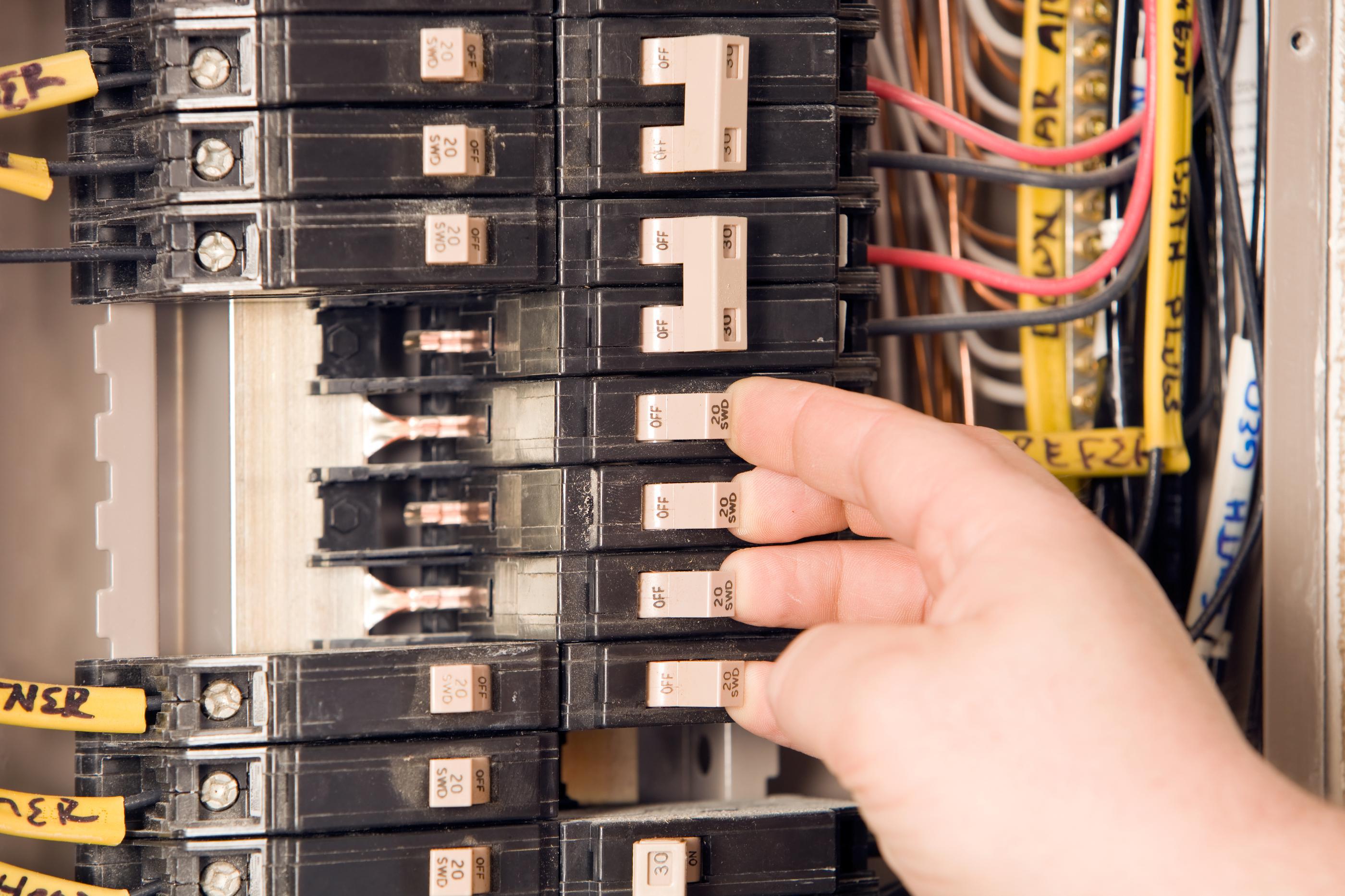
A circuit breaker that will not reset is doing more than interrupting power. It may be responding to an overloaded circuit, a short circuit, a ground fault, a defective appliance, damaged wiring, or another condition that has not been corrected. In some cases, the breaker handle simply has not been moved through the proper reset sequence. In others, trying to force the breaker back on could create a safety risk.
Homeowners can perform a few basic checks without opening the electrical panel or handling wiring. If the breaker trips again, will not remain on, or is accompanied by heat, odors, buzzing, or visible damage, leave it off and contact a licensed electrician.
How to Tell Whether a Circuit Breaker Has Tripped
A tripped breaker does not always move completely to the OFF position. Depending on its design, the handle may stop between ON and OFF. This can make the breaker appear as though it is still on even though the circuit has lost power.
Check the panel directory to identify the circuit serving the affected room or appliance. Look for a breaker that is out of alignment with the others or resting in a middle position. Do not remove the panel cover or touch anything other than the breaker handle.
Some outages are caused by a tripped GFCI receptacle rather than a breaker. If the breaker appears to be on but outlets have lost power, check for a nearby GFCI receptacle with a reset button. GFCI protection may serve outlets in bathrooms, kitchens, garages, basements, exterior areas, and other locations where electricity may be exposed to moisture.
When You Should Not Attempt a Reset
Do not reset a breaker when there are signs of an active electrical problem. Moving the handle does not correct damaged wiring, overheating, arcing, or moisture inside electrical equipment.
Leave the breaker off and request professional help if you notice:
- Smoke, sparks, or scorch marks
- A burning or melting-plastic odor
- Buzzing, crackling, or sizzling sounds
- Visible damage to the panel, breaker, outlet, or appliance
- Water or moisture near the electrical panel
- An electrical shock or tingling sensation
- Unusual heat around the panel, outlets, or switches
- A breaker that has already been reset and tripped again
Call emergency services first if there is an active fire, smoke, or another immediate danger. Once the immediate threat has been addressed, an electrician can inspect the affected electrical system before power is restored.
How to Reset a Tripped Breaker Once
If there are no warning signs, turn off lights and unplug accessible devices connected to the affected circuit. This reduces the load and may remove a malfunctioning appliance from the circuit.
Move the breaker handle firmly to the full OFF position before moving it back to ON. Some breaker designs will not reset if the handle is pushed directly from the middle tripped position toward ON.
Only attempt this reset once. If the breaker immediately trips, will not move, feels loose, or does not remain on, leave it off. Do not hold the handle in place or repeatedly force it back to the ON position.
Why a Breaker May Not Reset or Stay On
A breaker that refuses to reset may be responding to a problem elsewhere on the circuit. The timing of the trip can offer useful information, but professional testing is usually needed to confirm the cause.
The Circuit Is Still Overloaded
An overload occurs when connected devices draw more current than the circuit is designed to carry. If those devices remain plugged in or turned on, the breaker may trip again as soon as power is restored.
Portable air conditioners, space heaters, microwaves, hair dryers, power tools, dehumidifiers, and other high-demand equipment can contribute to overloads when they share a circuit with additional devices. Power strips and multi-outlet adapters do not increase the circuit’s electrical capacity.
If unplugging devices allows the breaker to remain on, the circuit may have been overloaded. Do not rely on extension cords or move high-demand appliances to random outlets as a permanent solution. An electrician can determine whether the equipment needs a dedicated circuit or whether the home requires another electrical improvement.
An Appliance or Device Is Faulty
A damaged appliance can cause a breaker to trip even when the circuit is not overloaded. Internal wiring, motors, heating elements, power cords, and plugs may develop defects that create excessive current or a fault.
If the breaker remains on after everything is unplugged, reconnect devices one at a time. Stop using any appliance that causes the breaker to trip again. Do not reconnect an appliance with a damaged cord, scorched plug, unusual odor, or visible defect.
Hardwired appliances and HVAC equipment should not be disconnected or tested by the homeowner. If a breaker trips when the air conditioner, water heater, range, or another hardwired system starts, an electrician or the appropriate equipment technician should evaluate it.
There Is a Short Circuit
A short circuit occurs when electrical current follows an unintended low-resistance path. This can result from damaged insulation, loose conductors, failed equipment, or wires contacting where they should not.
A short circuit may cause the breaker to trip immediately, even when most devices have been removed. It may also produce a pop, spark, burning odor, or visible damage. Leave the circuit off and do not attempt another reset.
Ground-Fault or Arc-Fault Protection Detected a Problem
Some circuits use GFCI, AFCI, or dual-function breakers. A GFCI device responds when electrical current follows an unintended path to ground, which can create a shock hazard. An AFCI device is designed to recognize certain arcing conditions that may result from damaged wiring or loose connections.
Moisture, damaged cords, faulty appliances, deteriorated wiring, and certain equipment problems may activate this protection. Outdoor circuits in Ocean County can be particularly vulnerable when water enters damaged receptacles, covers, or connections.
Do not replace a GFCI or AFCI breaker with a standard breaker to stop repeated trips. The cause of the trip should be professionally diagnosed while preserving the required protection.
The Breaker May Be Defective
Circuit breakers can wear out or develop internal defects. A handle that feels unusually loose, will not latch, or fails to restore power may indicate a problem with the breaker itself. However, these symptoms can also result from faults elsewhere on the circuit.
A breaker should only be replaced after the circuit and panel have been evaluated. Installing a breaker with the wrong type or rating can create a serious hazard. Mister Sparky® of Ocean County provides professional circuit breaker repair and replacement.
Wiring or Panel Components May Be Damaged
Loose connections, deteriorated insulation, corrosion, damaged bus connections, or other wiring and panel problems may prevent reliable operation. These conditions are not visible without the proper testing and should not be investigated by removing the panel cover.
An older panel is not automatically unsafe, but age, wear, obsolete components, water exposure, previous alterations, and increased household demand may affect its condition. A licensed electrician can determine whether the problem requires a wiring repair, breaker replacement, dedicated circuit, or electrical panel upgrade.
What If the Breaker Resets but the Power Stays Off?
A breaker can appear to reset even though the outlets, lights, or appliance remain without power. The problem may involve a tripped GFCI receptacle, a second disconnect, a failed breaker, a loose connection, damaged wiring, or an issue with the connected equipment.
Check accessible GFCI receptacles and confirm that switches controlling the affected outlet have not been turned off. If the problem remains, avoid opening outlets, switches, appliances, or the panel. An electrician can trace the circuit and identify where power has been interrupted.
Why Repeated Resets Are Unsafe
A circuit breaker is a protective device. Resetting it repeatedly without correcting the cause restores power to the same condition that triggered the shutdown. If the problem involves damaged wiring, an appliance fault, overheating, or an overloaded circuit, repeated resets may expose the system to additional stress.
Never tape, block, or hold a breaker in the ON position. Do not install a larger breaker to stop trips. Breaker ratings must correspond with the circuit conductors and connected equipment. Increasing the breaker size without correcting the circuit can allow wiring to overheat before protection activates.
How an Electrician Diagnoses the Problem
A professional diagnosis begins with when and how the breaker trips. The electrician may ask which devices were operating, whether the trip happens immediately, and whether there were odors, sounds, moisture, or recent electrical changes.
Depending on the findings, the electrician may:
- Evaluate the breaker and panel condition
- Measure the electrical load on the circuit
- Inspect accessible outlets, switches, and connections
- Check for short circuits, ground faults, or arcing concerns
- Test GFCI or AFCI protection
- Look for loose, damaged, or overheated components
- Determine whether an appliance or hardwired system is contributing
- Assess whether a dedicated circuit or other upgrade is appropriate
The goal is to identify why the protective device opened before replacing components or restoring the circuit. Mister Sparky® of Ocean County offers electrical repair, inspections, circuit breaker services, wiring work, and panel evaluations.
When a Breaker Problem Requires Prompt Help
A breaker that will not reset, trips immediately, or repeatedly interrupts the same circuit should be professionally inspected. Burning odors, buzzing, visible heat damage, water exposure, and electrical shocks require more urgent attention.
Mister Sparky® of Ocean County is available 24/7 for electrical problems that cannot safely wait for a regular appointment. Our licensed electricians serve Beachwood, Berkeley, Brick, Jackson, Manchester, Toms River, Holiday City Berkeley, Silver Ridge, and surrounding Ocean County communities.
Schedule Circuit Breaker Service in Ocean County
Do not put up with any malarky when a breaker keeps tripping or refuses to reset. Mister Sparky® of Ocean County can inspect the circuit, explain what caused the interruption, and review the available repair options using StraightForward Pricing®. Our electrical work is backed by the UWIN Guarantee and our commitment to get the job done right and get it done safely.
Contact Mister Sparky® of Ocean County to schedule circuit breaker service or request emergency electrical repairs when the situation requires prompt attention.