
Key Takeaways About Pool and Spa Wiring
Pool and Spa Wiring covers bonding, GFCI protection, clearances, and timer controls around water. This guide is for homeowners and property managers who need safety checks before using or servicing pool equipment.
- Identify loose or corroded bonding clamps and terminals quickly.
- Prevent shock risks by testing GFCI devices regularly and after storms.
- Avoid placing junction boxes and switches within splash zones.
- Spot overheating signs such as buzzing sounds or warm enclosures.
- Reduce energy waste with properly installed timers and interlocks.
- Plan professional inspections and documented tests for long term safety.
Introduction
Pool and Spa Wiring near water demands careful attention to bonding, GFCI protection, required clearances, and timer controls. Wet environments increase shock and corrosion risks for pumps, lights, and control equipment. Missing or incorrect bonding can let stray voltage travel through pool metal and create dangerous touch potentials. Homeowners often underestimate how quickly electrical faults around water become life threatening.
GFCI protection is a critical line of defense for equipment and receptacles serving pools and spas. When a device leaks current, a properly working GFCI trips and cuts power before a fatal shock can occur. You might notice frequent nuisance trips or warm junction boxes as early warning signs to investigate. Ignoring those symptoms can lead to worse failures or unsafe swimming conditions.
Required clearances around motors, heaters, and lighting keep heat, moisture, and electrical parts separated from swimmers and vulnerable wiring. Clearance rules also affect where junction boxes, switches, and timers are installed near water. A visible rust streak, buzzing under the pump lid, or scorched insulation signals a need for a professional inspection. Addressing clearance and placement problems reduces maintenance and safety risks.
Timer control options help manage circulation, heating, and lighting while reducing runtime and energy waste. Modern timers and control systems often add scheduling and remote control but still must sit behind proper protection and bonding. Homeowners in Lexington, SC and Cayce, SC report that inefficient schedules raise utility bills and wear equipment faster. When you see repeated breaker trips, odd noises, or corrosion, contact a certified electrician to diagnose and fix Pool and Spa Wiring concerns.

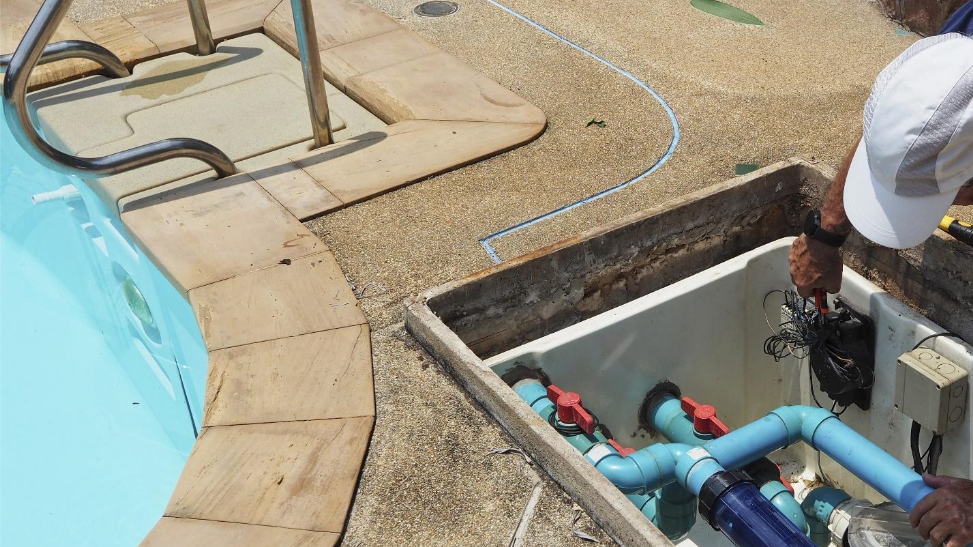
Photo from iStock - Credit: hikesterson
Basic Electrical Principles for Pool and Spa Wiring
Basic electrical principles for Pool and Spa Wiring cover grounding, bonding, GFCI protection, clearances, and control wiring practices for safety. Homeowners often ask if a GFCI always protects against shock, the answer is that GFCIs protect against ground-fault currents but do not replace proper bonding and grounding. Voltage and current behave differently around conductive water and metal, so equipment must follow safe wiring layouts. Simple measurements can show problems before they become dangerous.
- Grounding ties equipment to earth to stabilize voltage.
- Bonding connects metal parts so they share the same potential.
- GFCIs detect imbalance and trip quickly to cut current flow.
- Clearances prevent accidental contact and heat buildup near water.
Voltage readings at a pump or light can tell a professional whether wiring is correct and safe. An electrician will use a multimeter to check voltage and a continuity tester to confirm bonding conductors carry low resistance. They will inspect junction boxes for corrosion and measure insulation resistance when moisture is suspected. These steps reveal whether protective devices and wiring meet safety expectations.
Wire sizing, conduit type, and breaker protection all affect safe operation near water and reduce overheating risk. Properly sized conductors limit voltage drop and prevent excessive heat at terminals and connections. Using listed enclosures and corrosion-resistant fittings reduces water intrusion and failure points. Homeowners should note buzzing, warm boxes, or flickering lights as signs to call a professional.
Equipment placement and routing of control wiring influence both safety and serviceability around pools and spas. Clear, labeled wiring at the service panel and timers makes future inspections faster and safer for technicians. A professional will document readings and photo evidence, then recommend repairs or upgrades based on those results. If you observe corrosion, repeated trips, or odd noises, schedule a licensed electrician to diagnose Pool and Spa Wiring problems.
Why Bonding Works and When to Inspect Connections
Bonding reduces dangerous voltage differences by creating a low-resistance path between metal parts around water. A professional checks bonding conductors visually for corrosion and uses a continuity test to confirm low resistance between pool equipment, handrails, and metal enclosures. Visible loose clamps, greenish corrosion, or paint covering bonding points are common clues that a clamp is compromised and needs attention. If a homeowner notices a tingling sensation when touching metal near the pool, stop use and get an inspection immediately.
Inspecting connections includes torque checks at terminal screws and measuring resistance across bonding paths with a continuity tester or low-range ohmmeter. Technicians also lift covers to inspect junction boxes for moisture entry, loose splices, or overheated insulation that suggest poor connections. A proper inspection records voltage and continuity readings and photographs problem areas so recommendations are clear and verifiable. Homeowners in Lexington, SC may find older clamps and connectors that no longer provide reliable contact due to age or corrosion.
Bonding conductors must be continuous and properly attached to structural metal, equipment grounding terminals, and pool surrounds to equalize potential. Professionals look for single-point bonding arrangements and ensure jumpers bridge removable equipment like motor lids and light niches during maintenance. A competent electrician will check for correct conductor size and the presence of listed grounding/bonding clamps, then test that resistance stays low under normal wet conditions. Properties in Cayce, SC with frequent humidity should consider more regular inspections where metal corrodes faster.
When diagnosing bonding issues, a technician traces the conductor path, performs a continuity test, and simulates fault conditions with safe, controlled measurements. They will note symptoms such as stray current corrosion, electrolytic pitting, or tanks that show uneven rust patterns as evidence of electrical leakage. After confirming poor bonding or bad connections, the usual next steps are replacing corroded clamps, re-terminating conductors, and documenting new test readings in a written report. If you see damaged bonding parts or sense electrical issues near the water, schedule a certified electrician to evaluate Pool and Spa Wiring before using the pool.
GFCI Protection Mechanics and When to Replace Units
GFCI devices sense a difference between the hot and neutral current and trip in a fraction of a second to prevent dangerous shocks. A technician checks GFCI operation by applying a calibrated test tool and recording trip time and trip current values. They also verify wiring polarity, tight terminal connections, and that the device is on the correct circuit for the pool equipment. If a GFCI won't reset or shows physical damage, replacement is usually required to restore reliable protection.
Age and environmental damage shorten GFCI life near pools, where chlorine and salt accelerate corrosion on contacts and terminals. A professional inspects for greenish corrosion, cracked housings, or melted plastic that indicate moisture intrusion or heat stress. They will open the enclosure, take voltage readings, and perform insulation resistance tests to confirm the device no longer meets safety expectations. These diagnostic steps determine if repair, cleaning, or full replacement is the safest option.
Occasional nuisance tripping can signal a failing GFCI, but it can also point to downstream equipment leakage or shared neutral wiring faults. An electrician isolates the circuit by disconnecting loads, then retests the GFCI with only the device connected to determine whether the trip source is internal or external. If trips stop with loads removed, the tech inspects motors, heaters, and lighting for insulation breakdown or moisture. For persistent internal faults, replacing the GFCI and documenting pre- and post-replacement test readings is standard practice.
When replacing a pool-area GFCI, technicians choose devices rated for outdoor or wet-location use and follow manufacturer torque specs on terminals to avoid loose connections that heat. They will label the replacement and update circuit documentation in the service panel for future checks. Homeowners should expect clear before-and-after test records, while they may need more frequent checks if corrosion appears quickly. If you notice intermittent resets, warm enclosures, or persistent trips, contact a trusted electrician to diagnose and replace faulty Pool and Spa Wiring protection.
Required Clearances Around Water and When to Enforce Them
Keep minimum equipment-to-water clearances in mind when planning or modifying poolside electrical installations to reduce direct contact risk. Clearance rules protect swimmers from touching hot enclosures or exposed wiring and keep heat sources away from combustible materials. A professional electrician measures distances from pump motors, heaters, and lighting to water edges before approving placement. If measurements fall short, the electrician will recommend relocation or additional barriers to meet safe layout expectations.
- Maintain required separation from pool edge for motors and heaters.
- Keep junction boxes above the designated vertical clearance line.
- Avoid installing switches within immediate reach of the water.
- Place lighting at approved distances from the pool perimeter.
Vertical and horizontal clearances also affect where timers, disconnects, and control panels can sit relative to the water surface. Technicians verify that timers and disconnects remain accessible but not within splash zones that accelerate corrosion or cause nuisance trips. They inspect enclosures for listings suitable for damp or wet locations and recommend replacements if seals or gaskets appear degraded. Homes in Lexington, SC may require more frequent checks if outdoor equipment faces heavy use or chemical exposure.
When clearances are marginal, professionals use simple diagnostic checks to confirm safety before allowing operation. They measure reach distances, verify enclosure ratings, and perform a visual check for signs of moisture intrusion or rust around terminals. A continuity test on grounding conductors and a voltage reading at the device confirm that protective paths remain intact under current conditions. If results show compromised protection, technicians will tag the equipment out of service and provide a written recommendation for corrective work in Cayce, SC.
Timer Control Options for Pumps and Heater Safety
Modern timers control pump and heater runtimes to reduce wear and prevent overheating by limiting continuous motor operation. Mechanical and digital timers offer basic schedules, while smart controllers add temperature-based logic to start and stop heating cycles. A technician checks timer outputs with a multimeter to confirm proper switching and measures voltage at the load while the timer operates. If a timer fails to open or close reliably, it can leave a heater energized and create a thermal risk requiring immediate repair.
Time-delay relays and contactors protect small control devices from carrying full motor current continuously by shifting loads to appropriately sized contacts. An electrician inspects contact surfaces for pitting and measures coil voltage to ensure reliable operation before recommending replacement. For heater safety, technicians verify that the timer interlocks with high-limit switches so the heater cannot run unattended if temperatures rise excessively. Faulty interlocks or worn contacts often show as humming sounds, slow motor starts, or uneven heating patterns.
Location of the control relative to the pool affects which enclosure and protection level a timer needs, so installers choose weatherproof boxes with proper gaskets and corrosion-resistant terminals. A professional confirms that control wiring uses correct conductor sizes and that a separate disconnect or breaker is accessible for service. They also test any remote or automation links for correct isolation to ensure a single fault cannot energize both the pump and heater simultaneously.
When diagnosing timer issues, a technician follows a step sequence: visual inspection, voltage checks at input and output, continuity across contacts, and verification of control logic under load. Observable cues like stuck switches, delayed operation, or scorch marks guide the inspection and point to likely failures in timers or contactors. After testing, the electrician provides a written report with readings and explains options such as replacing a worn mechanical timer or upgrading to a controller with safer interlocks.
Common Faults in Pool and Spa Wiring and How They Start
Failing connections at pump terminals often begin with vibration loosening screw lugs or corrosion eating away at copper surfaces. A homeowner might hear a faint buzzing or notice the pump housing hotter than usual, which suggests high-resistance joints. A pro diagnoses this by turning power off, removing the terminal cover, and measuring voltage drop under load with a multimeter. If readings show excessive voltage loss, the technician tightens or re-terminates the conductor and records before-and-after values.
Insulation breakdown on control wires commonly starts where cable passes sharp edges or through wet enclosures that let moisture wick along conductors. Visible cracked insulation, greenish corrosion, or damp wiring are clues that water has compromised the jacket and insulation resistance. An electrician performs an insulation resistance test with a megohmmeter and isolates the circuit to find the damaged section. Repair often requires replacing the affected cable length and installing proper grommets or conduit to prevent recurrence.
Timers and contactor failures often begin as small contact pitting that grows from repeated arcing during switching, producing heat and intermittent operation symptoms. Homeowners may notice delayed pump start, clicking sounds, or lights dimming when the timer activates, which point to failing contacts or control coils. A technician inspects contact faces, measures coil voltage, and checks continuity across contacts under load to confirm the fault. Replacing worn contacts or upgrading to a relay with higher duty rating typically restores reliable operation.
Improper or missing bonding connections can produce stray voltage that starts as mild tingling or corrosion patterns on metal fixtures near water. A professional checks bonding continuity with a low-range ohmmeter and traces the conductor path to confirm continuous low resistance between metal elements. If a broken clamp or painted bonding point is found, the repair involves replacing the clamp and re-testing to document proper bonding. Homeowners who feel unusual sensations at pool edges should stop use and schedule an electrician to inspect Pool and Spa Wiring immediately.
Ground-fault protection faults often begin as nuisance trips caused by moisture in lamp niches or shared neutrals that create imbalance under certain loads. Observing repeated trips at specific times or after rain helps isolate the offending circuit and guides the technician to disconnect loads for sequential testing. The diagnostic sequence includes GFCI trip tests, load isolation, and insulation resistance checks to identify whether the device or downstream equipment fails.
Warning Signs for Homeowners and When to Call Help
Visible overheating around pool equipment often appears as discolored paint, melted plastic, or a persistent hot feel at enclosures. These signs suggest a failing connection, overloaded circuit, or blocked ventilation that needs measurement. A technician confirms by taking temperature readings, checking terminal torque, and measuring current under load. If you notice heat around a pump or heater, stop use and arrange a professional inspection promptly.
- Warm junction boxes require immediate inspection.
- Buzzing or humming indicates loose or overloaded connections.
- Frequent breaker trips signal a persistent fault.
- Tingling sensations near metal require stopping pool use.
- Visible corrosion on terminals needs replacement.
Intermittent or time-related issues often point to failing timers, relays, or moisture-affected controls that operate unpredictably. A pro will reproduce the fault by running timed cycles while monitoring voltage and contact continuity. They may also inspect gaskets and wiring to find moisture intrusion that causes random failures. Homeowners in Lexington, SC should document when the problem occurs to help the technician diagnose recurring patterns.
Loss of lighting or dimming during pump start can indicate voltage drop from loose lugs or undersized conductors feeding multiple loads. An electrician measures voltage at the panel and at the load while the pump starts to capture transient drops. Recorded readings and photos form a report that guides corrective actions like re-terminating or upsizing conductors.
Hiring A Professional for Pool and Spa Wiring Services
Hiring a licensed electrician ensures a written scope and clear diagnostic steps for Pool and Spa Wiring that you can review before work starts. A good contractor will perform a visual inspection, continuity checks on bonding conductors, and GFCI trip timing tests to document existing conditions. Expect the pro to record voltage and resistance readings and to photograph any corrosion or damaged components found during the inspection. Ask for a simple written estimate that lists recommended repairs and safety priorities so you can compare options.
During the on-site diagnosis, the technician should test equipment under normal operating conditions and replicate intermittent faults when possible. They will measure current draw at the pump and heater, check timer outputs with a multimeter, and perform insulation resistance tests on control wiring to find moisture-damaged segments. If the problem reproduces, the electrician will isolate the failing component and explain whether repair or replacement makes the most sense. Homeowners should request copies of the test readings and a short explanation of how the conclusions were reached.
Verify the electrician’s qualifications by asking about licensing, insurance, and experience specifically with pools and spas rather than general wiring only. Request references or examples of completed jobs that involved bonding, GFCI protection, and timer interlocks so you can see documented outcomes. A professional should also outline permit needs and whether the work will require a local inspection when applicable. For homeowners, clarify how often follow-up checks or maintenance visits are recommended after repairs.
Obtain clear timelines and a payment schedule before work begins and confirm that all new components carry manufacturer warranties. After repairs, the electrician should re-test bonding continuity, GFCI operation, and timer interlocks, then leave a brief report of final readings and any remaining recommendations. If you own multiple outdoor systems, ask the tech about a scheduled maintenance plan to prevent repeat failures and extend equipment life.