
Key Takeaways About Electrical Rewiring Safety
Electrical rewiring safety means restoring safe wiring paths grounding and secure terminations to prevent shocks and fires. This guide is for homeowners and property managers who notice warning signs or plan upgrades and need to act before risks worsen.
- Identify hot outlets warm switches and scorch marks promptly.
- Prevent fires by addressing loose connections and overloaded circuits.
- Avoid DIY inspections that involve opening junction boxes or panels.
- Spot intermittent power flicker buzzing sounds and nuisance trips early.
- Reduce risk with documented inspections voltage readings and infrared scans.
- Plan staged rewiring or targeted repairs based on written findings.
Introduction
Old wiring can hide risks that grow over time and create real safety hazards in homes. Flickering lights, buzzing outlets, or frequent breaker trips often signal underlying problems. Ignoring those signs raises fire risk and can damage appliances or electronics. Homeowners need to recognize when a system may require professional attention.
Rewiring is not just about replacing wires, it restores safe paths for electrical current. Faulty connections, worn insulation, and improper grounding all change how circuits behave. Those issues can cause shocks, overheating, or arc flash hazards. Understanding the stakes helps prioritize inspections and repairs.
Inspectors check panels, circuit breakers, junction boxes, and grounding conductors to find hidden faults. Technicians also use voltage readings, continuity tests, and infrared scans to confirm overheating or loose connections. Results often appear as written reports and photos that clarify needed work. Clear diagnostics guide safe, code-aware decisions for rewiring projects.
Homeowners in Blythewood, SC, and properties in Gilbert, SC, sometimes live in older homes with outdated wiring systems. If outlets feel hot, you smell burning, or outlets and switches fail often, you should call a professional. Mister Sparky® of Columbia, SC can perform inspections and explain repair options without pressure. Acting early reduces risk and helps protect people and property.
How Electrical Rewiring Safety Works in Homes
How electrical rewiring safety works in homes means restoring safe conductor paths, grounding, and secure terminations so circuits operate as intended. Technicians focus on preventing overloads and stopping arcing that can start fires. Homeowners often ask whether rewiring fixes frequent breaker trips, and the short answer is yes when trips come from wiring faults rather than appliances. Proper rewiring replaces damaged insulation, corrects shared neutrals, and updates grounding to reduce shock and fire risk.
- Inspect service panel condition.
- Test circuit continuity and voltage.
- Verify grounding and bonding connections.
- Replace damaged or undersized conductors.
Rewiring safety begins with a methodical inspection that locates hazards before cutting power and removing old cables. A professional will identify panel issues, overloaded circuits, and improper junction box practices during this step. Simple homeowner checks can help prioritize work, such as noting outlets that feel warm or lights that dim when appliances start. If you notice those symptoms, mention them during any inspection so the technician can target those circuits first.
Diagnosis relies on observable symptoms and measured readings to confirm problems before rewiring starts. Inspectors use voltage readings, continuity tests, and infrared scans to locate loose connections and overheating without guessing. They also open junction boxes and examine splices, checking that all terminations use the correct connectors and have proper insulation. Written reports and photos document findings and explain whether localized repairs or full circuit replacement is safest.
During rewiring, crews follow a clear sequence that reduces risk and preserves service where possible. First, they isolate and label circuits, then remove old cables, install new conductors, and update grounding and GFCI or AFCI protection where required. Homeowners should expect clear explanations of the sequence and safety steps before work begins. In a common situation, a homeowner smells a faint burning scent and loses power in a room, a professional would check the outlet temperature, test the breaker, and trace the circuit to find a failed connection.
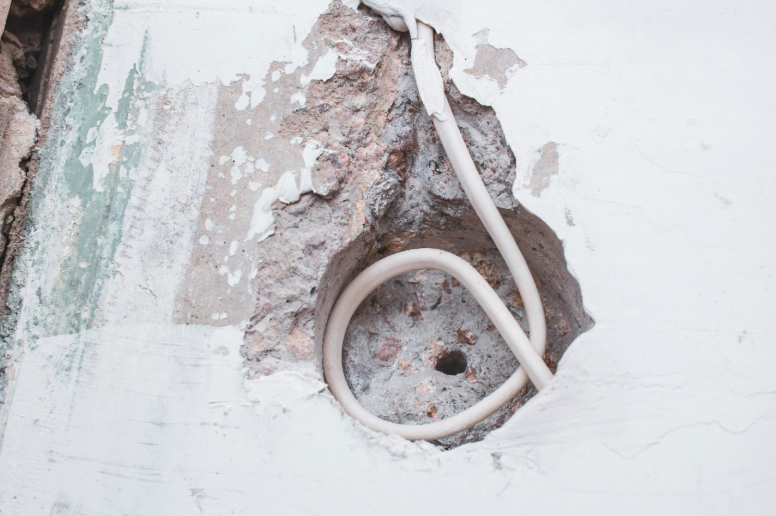
Photo from iStock - Credit: Denis Torkhov
Common Causes of Wiring Failure and Why It Happens
Age wears on wire insulation and connections, causing brittle or cracked coverings that expose conductors to contact and moisture. Rodent activity can chew insulation and create hidden shorts behind walls, where homeowners rarely see damage until a fault appears. Poor initial installation leaves undersized conductors or loose terminations that heat under load and eventually fail. Corrosion at service lugs or grounding conductor points degrades continuity and raises the chance of overheating during heavy use.
Overloaded circuits occur when more devices draw power than the circuit and breaker were designed to handle, producing repeated trips and elevated conductor temperatures. Changes in household use, like adding large appliances without a load calculation, stress existing wiring and connections. Shared neutrals or improperly tied circuits may allow unexpected current paths that heat wires or trip breakers unpredictably. A professional will perform a load calculation and inspect panel wiring to advise whether circuit reconfiguration or new circuits are needed.
Physical damage from renovations often leaves cables pinched or stapled too tightly in framing, which can nick insulation and create intermittent faults. Moisture intrusion in basements or crawl spaces accelerates insulation breakdown and corrodes connections, increasing shock and fire risk. Junction boxes that lack proper covers or contain overloaded splices create hotspots and arc risks over time. In Blythewood, SC homes with older renovations, these installation issues can be especially common where DIY work used nonstandard practices.
Heat buildup near panels or in wall cavities signals poor ventilation or overloaded paths that reduce conductor ampacity and speed failure. Devices like GFCI or AFCI that trip repeatedly may point to wiring faults rather than device defects. To diagnose, a professional will take voltage readings, perform continuity tests, and use infrared scans to find hot spots without guesswork. In Gilbert, SC properties, inspectors often document findings with photos and a written report to show which circuits require replacement or repair.
Warning Signs of Unsafe Wiring Every Homeowner Should Know
Buzzing or sizzling sounds from outlets, switches, or the service panel often indicate loose connections or arcing that need prompt attention. A homeowner who hears these noises should avoid using the affected circuit and note when the sound occurs, such as when an appliance starts. A professional will perform voltage readings, a continuity test, and open accessible junction boxes to locate the loose termination or arc source. These checks produce measurable readings and photos that confirm whether a circuit requires repair or replacement.
Repeated nuisance tripping of breakers or frequent blown fuses can mean a deteriorating conductor, shared neutral, or improperly sized breaker that fails under normal loads. Document when trips happen and which devices were running, since patterns help pinpoint overloaded circuits versus appliance faults. During inspection, a technician may use an infrared camera to find hot spots and perform a load calculation on the panel to assess circuit capacity. The result guides whether to upgrade conductors, add circuits, or change breaker types for safety.
Warm or discolored outlet and switch plates, or scorch marks near receptacles, signal heat buildup and possible insulation failure that can lead to fires if ignored. Homeowners should feel the outlet cover briefly; sustained warmth or a burning smell requires immediate shutdown of that circuit and a call for professional help. An inspector will remove the cover, examine the receptacle, check the grounding conductor, and test for loose screws or back-wire faults with a voltage meter. These steps confirm whether repairs can be made at the device or if rewiring that circuit is safer.
Intermittent power, such as outlets that work sometimes or lights that flicker in one room, often points to a loose splice, damaged cable, or corroded connection concealed in a junction box or behind walls. A technician will trace the circuit, test continuity across segments, and open junction boxes to inspect splice types and connectors for corrosion or improper joins. In Blythewood, SC properties, older junctions without proper connectors can fail slowly and show these symptoms before more serious faults occur. Clear diagnostic results help homeowners decide whether targeted repairs or broader rewiring better protect the home.
GFCI or AFCI devices that trip repeatedly despite resetting usually reveal wiring faults such as shared neutrals, moisture intrusions, or degraded insulation causing imbalance. Note where the trips occur and what equipment was running; this information helps the professional reproduce the problem during inspection. Technicians will test the device, isolate downstream circuits, and use continuity checks to locate the fault path and any damaged conductors. After diagnosis, they provide repair options and explain how each choice affects long-term electrical rewiring safety.
Hidden Hazards During Rewiring Projects and When to Stop
During rewiring, hidden hazards often appear behind walls or above ceilings where visual inspection did not reach. Technicians may find degraded sheathing or concealed water damage that weakens insulation and increases shock risk. If crews detect unusual heat with an infrared scan, they may stop work to re-evaluate circuit routing. Homeowners should be prepared to pause the project if new hazards raise immediate safety questions.
- Loose connections discovered in junction boxes require correction.
- Corroded grounding conductors need replacement.
- Overlapped circuits may need separation.
- Damaged conduit sections must be repaired.
Work should stop immediately when electricians encounter signs of active arcing, persistent smoke, or a strong burning odor. These indicators suggest ongoing faults that can escalate quickly and must be isolated before continuing. A professional will perform voltage readings and continuity tests to confirm the source and extent of the problem. Written documentation and photos help homeowners understand the risk and next steps.
If crews uncover knob-and-tube remnants, aluminum branch wiring, or incorrectly shared neutrals, they will reassess the plan to meet modern safety standards. These materials often require circuit isolation and staged replacement to reduce outage impacts and maintain safety during the project. The electrician will check breaker capacity, GFCI or AFCI protection needs, and proper grounding conductor connections before resuming. For homeowners in Blythewood, SC, or Gilbert, SC, pausing work to address these hazards can prevent costly follow-up repairs.
What Professional Inspectors Check and When to Call
A professional inspector begins with a visual and electrical audit of the service panel, checking breaker labeling, conductor terminations, and evidence of overheating. They will perform voltage readings at the panel and selected receptacles to confirm proper distribution and identify voltage drop under load. Inspectors open accessible junction boxes to verify splice types and connector integrity, documenting poor terminations with photos. If corrosion or damaged insulation appears, the inspector notes whether localized repairs or broader circuit replacement best reduce risk.
Next, the inspector tests protective devices like GFCI and AFCI to ensure they trip correctly and protect downstream circuits as designed. Continuity tests across neutrals and grounds confirm there are no shared neutrals or open grounding conductors that can cause imbalances. Technicians may use an infrared scan to detect hot spots along bus bars, breakers, and visible cable runs without invasive demolition. These recorded readings and images become part of a written report that outlines recommended actions and priorities.
When an inspector finds ambiguous symptoms, they perform targeted circuit tracing and load checks to reproduce faults under controlled conditions and pinpoint sources. They check outlet and switch tightness, measure outlet faceplate temperature, and look for signs of arcing around contacts or devices. If moisture intrusion is suspected, the inspector documents damp areas and recommends next steps to address both moisture and electrical safety. Residential homeowners should share observed patterns and timing of faults to help reproduce intermittent issues during inspection.
Inspectors also verify grounding and bonding continuity from the service panel to water pipes and grounding rods, ensuring a low-resistance path for fault currents. They inspect bonding at metal conduit, subpanels, and major appliances to confirm consistent protection across the system. For properties in Gilbert, SC with older wiring, inspectors may recommend staged upgrades when full replacement would cause extended outages. After diagnostics, the inspector provides clear timelines and safety recommendations so homeowners can decide when to schedule professional rewiring.
Temporary Safety Measures Before Professional Rewiring Arrives
Shut off circuits at the main panel for any area showing heat, smoke smell, or repeated arcing until a technician arrives. Label the tripped breakers and note which appliances ran when the problem began to help the electrician reproduce the fault. Avoid using extension cords or power strips to work around outlets that have failed or feel warm. If you find a damp outlet, keep it off and dry the area to reduce shock risk before the pros inspect.
Use simple visual checks to reduce immediate hazards without opening wiring or junction boxes yourself. Look for melted insulation, discolored receptacles, or loose cover plates and tighten covers gently to prevent dust and pests from reaching conductors. Keep children and pets away from affected rooms and tell household members which breakers are off to avoid accidental re-energizing. When possible, unplug devices from the affected circuit and place a note on the panel to warn others.
Temporary lighting and power can make life manageable during a repair, but choose safe alternatives like battery-powered lamps rather than improvised solutions that increase load on other circuits. Move critical medical equipment to a known-good circuit after confirming it carries safe voltage with a simple plug-in outlet tester. In Blythewood, SC homes where intermittent faults interrupt daily routines, this step helps preserve safety until an inspector can perform full diagnostics. Take photos of visible damage to show the electrician so they can plan replacements or staged work.
If you smell burning from a circuit, evacuate the area and call emergency services if the odor is strong or persistent before contacting an electrician. For nonemergency hazards, gather evidence such as outlet temperatures, breaker trip patterns, and pictures to speed diagnosis when the service technician arrives. A professional will later use voltage readings, continuity tests, and infrared scans to confirm the cause and scope. Keeping detailed notes reduces onsite time and helps homeowners compare repair options during the follow-up visit.
Costs, Timelines, and Decision Points for Rewiring Projects
Start by planning scope: decide whether you need targeted circuit replacement or whole-house rewiring after inspection results. Obtain multiple written estimates that list materials, labor hours, and expected disruptions for comparison. Expect timelines to vary with home size, panel access, and presence of hazardous materials that require remediation. Ask each contractor for a clear schedule that shows milestones and estimated completion dates.
- Request a written scope of work.
- Ask for a project timeline.
- Confirm required permits.
- Check for staged outage plans.
- Ask about cleanup procedures.
Costs depend on materials, labor, and complexity of routing new conductors through finished spaces. Additional expenses arise from upgrading the service panel, adding subpanels, or installing AFCI and GFCI protection for safety compliance. Homeowners should budget for inspections, permit fees, and possible drywall repair after cable runs are installed. Comparing itemized bids clarifies which choices drive price differences.
Typical project timelines range from one day for a single circuit to several weeks for full rewiring that includes panel upgrades. Staged approaches reduce outage time by working room-by-room and restoring portions of service between stages. A professional diagnosing an intermittent fault will first reproduce the symptom, perform voltage readings, and trace the circuit before scheduling replacement work
Key decision points include safety, budget, resale plans, and disruption tolerance when choosing between repairs and full rewiring. If inspections show aluminum branch wiring, widespread insulation damage, or unreliable grounding, full replacement often provides better long-term value. Evaluate return on investment if you plan to sell soon, since modern wiring can affect appraisal and buyer confidence.
When Homeowners Should Call Mister Sparky of Columbia, SC
If you notice recurring electrical problems after an inspection, schedule a professional assessment with Mister Sparky® of Columbia, SC to confirm next steps. A qualified electrician will perform targeted voltage readings and continuity tests to verify suspected faults and produce a written repair plan you can compare. They can advise whether staged work or a full circuit replacement better balances safety and disruption for your household. Homeowners should bring documented symptoms and any photos to speed the diagnostic process.
Call when visible damage appears during renovation work, such as chewed cable sheathing or exposed conductors found in wall cavities. The technician will open junction boxes and test splices with a multimeter to confirm insulation failure or loose terminations before recommending rewiring. If insulation degradation or corrosion appears widespread, a scoped plan reduces the chance of repeat failures and limits downtime. Discussing staged timelines helps you plan living arrangements during the work.
Contact Mister Sparky® of Columbia, SC, if protective devices like GFCI or AFCI trip persistently after basic troubleshooting and device replacement. During a diagnostic visit, the electrician isolates downstream circuits and uses continuity checks to find shared neutrals or ground faults that cause nuisance trips. They may also run load measurements while appliances operate to reproduce the problem under normal conditions. This evidence-based approach clarifies whether rewiring or targeted repairs resolve the issue.
Homeowners in Blythewood, SC should call sooner when intermittent power affects critical appliances, while properties in Gilbert, SC may prefer staged upgrades to limit outages for occupants. The crew can provide a written estimate showing labor, materials, and expected milestones so you can schedule work that fits your needs. If the inspection finds active arcing or burning odors, arrange for immediate service rather than delaying. Scheduling a professional visit provides documented findings and clear options without sales pressure.