
Key Takeaways About Breaker Panel Upgrade
A breaker panel upgrade means replacing or increasing a home's service panel to match modern electrical demands. This guide is for homeowners and property managers who notice signs of overload or plan major appliance additions.
- Identify flickering lights warm outlets and frequent nuisance trips.
- Prevent overheating by checking connections grounding and breaker condition.
- Avoid DIY service panel changes that can create safety and permit issues.
- Spot burning smells scorch marks buzzing noises and visible corrosion.
- Reduce future outages by adding dedicated circuits and larger feeder capacity.
- Plan inspections permits and documented test readings with your electrician.
Introduction
Old or undersized breaker panels can cause flickering lights, frequent tripped breakers, and unreliable power for modern appliances. When circuits trip often or outlets feel warm, those are real signs of stress on the electrical system. Ignoring those symptoms increases the risk of equipment damage and electrical fire hazards in the home. Homeowners deserve clear reasons to consider a breaker panel upgrade before small problems become emergencies.
Homes built decades ago often have panels that were never sized for today’s demand from HVAC units and electronics. A panel that lacks space for new breakers forces homeowners to use extension cords and overloaded outlets. That creates both inconvenience and safety concerns, especially in rooms with heavy use like kitchens and home offices. Recognizing the difference between normal wear and dangerous symptoms matters for long term reliability.
Professional diagnosis looks beyond obvious signs and checks grounding, arc fault protection, and overall load capacity with measured readings. The inspection may reveal outdated components such as two-prong outlets, fused disconnects, or rusted bus bars that need replacement. A technician will compare measured loads to safe limits and point out where capacity falls short. Those findings form the basis for a recommended breaker panel upgrade and safer operation.
For homeowners in Batesburg-Leesville , SC and Columbia, SC, increased electrical capacity improves everyday life and reduces worry about sudden outages. Upgrading a service panel can allow modern appliances to run at full capacity without repeated trips or overheating. It also creates room for future additions like electric vehicle chargers or heat pumps. Addressing panel issues sooner helps protect people and property while improving system reliability.
How Older Panels Fail and Why It Happens
How older breaker panels fail when parts wear out or get overloaded is the gradual loss of safe capacity and protection. Aging connections loosen and create heat at lugs and bus bars, which can darken insulation or melt nearby wiring. A professional will often ask whether you notice burning smells or scorch marks near the panel as these are common homeowner cues. If you see those signs, an electrician can confirm the problem with voltage readings and thermal inspection tools.
- Loose connections increase resistance and heat.
- Corroded bus bars reduce conductivity.
- Outdated breakers may not trip properly.
- Rust and moisture damage insulation and metal parts.
Mechanical failure in breakers and worn trip mechanisms happen with repeated cycling over decades of use, reducing effectiveness. Breakers that trip too slowly or not at all leave circuits exposed to sustained overloads and risk. A technician checks breaker trip performance with load tests and by inspecting internal parts for wear or pitting. Homeowners often ask if a breaker that never trips is safe, and the clear answer is no.
Panel overheating often starts at bad connections or overloaded subcircuits and spreads if left alone. Signs include warm cover plates, discolored breakers, or a persistent hot-smelling odor near outlets during heavy use. Electricians measure current on conductors and compare results to the panel rating to confirm overload conditions. For properties in Columbia, SC those checks also help determine whether local climate factors increased corrosion risk.
Some older panels lack modern safety features like AFCI or GFCI protection, increasing shock and fire risk in new-use scenarios. A professional inspects grounding conductors, GFCI locations, and evaluates the need for arc-fault protection based on bedroom and living area circuits. For homeowners in Batesburg-Leesville , SC it's useful to know a diagnosis produces a written report showing where protections are missing. That report guides whether a breaker panel upgrade will close safety gaps and add capacity for future needs.
Common Causes of Undersized Electrical Panels
Panels become undersized when homeowners add high-demand appliances without updating service capacity. Electric vehicle chargers, modern heat pumps, and kitchen remodels all increase continuous load. A breaker panel upgrade often follows when the sum of new circuits exceeds safe design limits. An electrician performs a load calculation to confirm whether the existing service can handle added demand.
Work done over years without panel expansion creates crowded breakers and tandem installations that hide capacity issues. Two-breaker-on-one-slot arrangements may look tidy but can exceed bus ratings when the panel is not designed for them. Inspectors may find shared neutrals and doubled-up breakers during evaluations, which can trigger recommendations for a new panel. Replacing improper configurations with correctly sized breakers and dedicated circuits helps reduce overload risks. Homeowners can also review our guide, "prevent costly electrical panel callbacks in Columbia, SC," to understand how proper electrical assessments and installation practices help avoid repeat service visits.
Damage from moisture or pests can reduce a panel’s usable capacity even if the rating looks adequate on paper. Corrosion at lugs or eaten insulation forces electricians to remove damaged circuits from service to prevent faults. Technicians document findings with photos and voltage or continuity readings before advising on replacement.
Improper previous work and DIY changes are common causes of undersized panels in older homes. Homeowners sometimes extend circuits with subpanels or inline splices that mask the true load on the main panel. A professional inspection uncovers hidden junctions, measures conductor temperatures, and checks grounding continuity to confirm if the main panel must be upgraded.
Warning Signs Your Home Needs Immediate Attention
Buzzing or crackling sounds from the service panel or nearby outlets are urgent cues that need inspection right away. These noises often come from loose connections, arcing, or failing breakers that create intermittent contact and heat. A qualified electrician will open the panel, look for loose lug screws, check breaker seating, and use a thermal camera to spot hot spots. If the inspector finds arcing or melted insulation, they will recommend shutting off affected circuits until repairs or replacement occur.
A persistent burning smell or visible scorch marks near receptacles or the panel indicates active overheating that can lead to fire. Homeowners should note when the smell occurs, which circuit powers active loads, and report those observations during the call. During diagnosis, a technician measures current on conductors with a clamp meter and inspects neutral and grounding continuity to locate the fault. If damage is confirmed, replacing the breaker or upgrading the panel may be necessary for safety.
Frequent unexplained nuisance trips that happen across multiple unrelated circuits suggest the panel cannot handle available loads or has failed trip mechanisms. An electrician performs a load test and compares measured amperage to the panel rating and individual breaker capacities. They also test breakers for proper trip response using controlled overloads or manufacturer test procedures to see whether breakers operate reliably. Results guide whether targeted breaker replacements suffice or a full breaker panel upgrade is required.
Warm or hot cover plates and breakers during normal use point to high resistance spots at connections or overloaded bus sections that need immediate attention. The professional inspection includes voltage drop measurements and thermal imaging to confirm whether heat is localized or systemic. For homeowners in Batesburg-Leesville , SC and elsewhere, documenting readings and photos helps prioritize repairs and supports permit applications when a panel change is planned. After diagnosis, the electrician provides a clear written recommendation and next steps to restore safe operation.
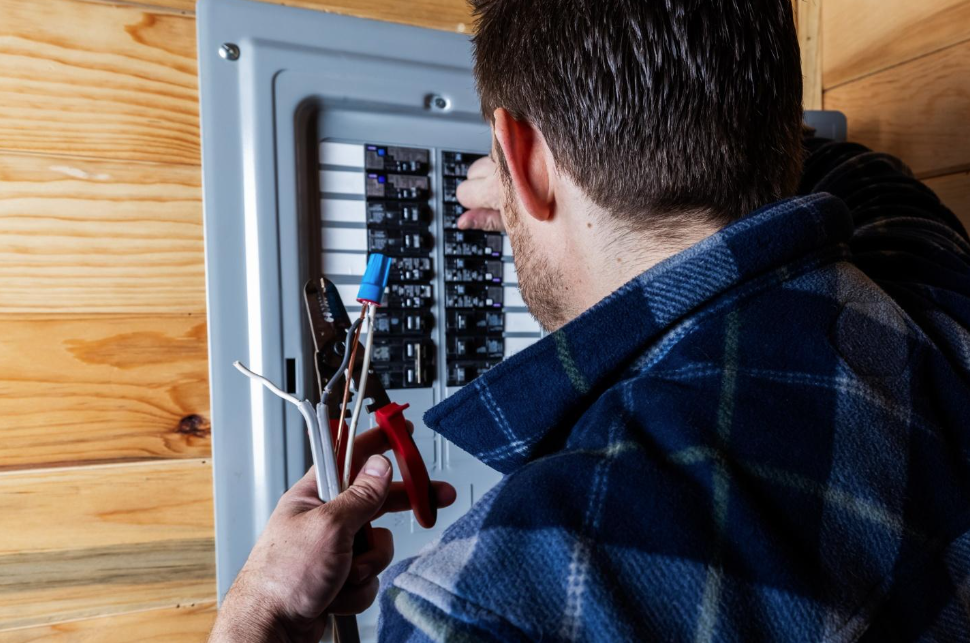
Photo from iStock - Credit: Charles Wollertz
What A Breaker Panel Upgrade Involves
A professional upgrade begins with a detailed plan that shows new panel size, circuit layout, and necessary safety devices. The electrician will map existing circuits, label loads, and decide whether to add AFCI or GFCI protection. They confirm feeder conductor sizes and grounding conductor condition before ordering equipment. Homeowners should expect a clear timeline and a written scope of work to review.
- Disconnect power safely before work begins.
- Remove the old panel and inspect bus and lugs.
- Install the new panel and properly seat breakers.
- Reconnect circuits with correct torque on lugs.
- Test grounding and protective devices after installation.
On the day of replacement, the electrician will shut off service and remove the meter if required by the utility. Technicians then strip and reterminate conductors, replace the panel, and install appropriately sized breakers and ground bars. They perform continuity and voltage tests on neutrals and grounds to confirm safe connections. Thermal scans or measured load checks finish the onsite verification process.
Additional tasks often include adding new circuits and upgrading the main service disconnect when needed for capacity. The provider may recommend a load calculation to justify a larger service or a subpanel for high-demand areas. For properties in Columbia, SC, inspectors sometimes request extra documentation during permit reviews. The crew leaves labeled breakers and a brief report showing test results for homeowner records.
After electrical work, the electrician completes operational checks and documents readings like voltage and continuity. They will also demonstrate panel operation and advise where to avoid overloading new circuits. Homeowners in Batesburg-Leesville , SC can use the report when planning future appliance additions. If inspection issues arise, the technician coordinates corrections promptly to meet permit requirements.
When To Call a Professional for Breaker Panel Upgrade
Call a licensed electrician when you notice complex symptoms that a quick repair does not fix or when the job requires altering service equipment. A professional will perform a full load calculation, inspect feeder conductor sizes, and verify grounding continuity before recommending changes. They also check for required AFCI and GFCI updates during the assessment to ensure code-aligned safety. If the panel services an addition or new major appliance, involve a pro early to avoid surprises.
Schedule a professional if your planned work includes adding dedicated circuits, installing an EV charger, or changing the main disconnect size. The electrician will map circuits, label them, and decide whether a subpanel or larger main panel is needed to maintain safe distribution. They perform voltage readings, thermal scans, and continuity tests to confirm hidden issues that visual checks miss. This diagnostic evidence informs whether a breaker panel upgrade is practical or necessary.
Call for help when you smell burning near outlets or see repeated breaker failures that cross multiple unrelated circuits during normal household use. A technician will open the panel, look for loose lugs, test breaker trip function, and use a clamp meter to measure current under load. If corrosion, arcing, or failing trip mechanisms appear, they will recommend replacing components or the entire panel for safety.
Contact an electrician before you buy a new high-demand appliance so you can avoid undersized service and unexpected downtime during installation. The professional confirms whether your service can handle added continuous load and prepares a scope of work for permitting and inspection. They will provide a written estimate and a timeline that aligns with required permit inspections to minimize delays. Scheduling the electrician in Columbia, SC early helps coordinate utility notifications if meter or service disconnect work is needed.
Permit Requirements and Inspection Steps Homeowners Should Know
Permits for a breaker panel upgrade usually come from the local building department and ensure work meets safety standards. Your electrician will submit plans showing panel size, conductor sizes, and circuit layout for review. Inspectors use that paperwork to confirm the installation matches code expectations before approving final connections. Expect the permit process to define required inspections and any documentation needed after work completes.
During the upgrade, inspectors verify grounding, neutral terminations, and proper breaker types for each circuit with visual and tested confirmations. The electrician will perform continuity and voltage tests and provide those readings when asked by the inspector. Inspectors may use thermal imaging or clamp meters to confirm no hidden overheating remains after retermination. A signed inspection report documents compliance and notes any follow-up corrections required.
Homeowners should plan for at least one rough inspection and one final inspection during a standard panel replacement, which keeps the project on a clear schedule. The rough inspection typically occurs after mounting and before final conductor terminations in some jurisdictions. Final inspection confirms labeling, torque on lugs, and correct protective device installation once power is restored. Coordinating inspection timing reduces delays and helps the electrician address any minor corrections quickly.
For properties in Columbia, SC and Batesburg-Leesville , SC, keep copies of permits and the electrician’s test reports for future resale or insurance purposes. If an inspector requests changes, the licensed electrician handles required repairs and reinspection to secure approval. Always ask the electrician to explain the inspection findings and provide a clear written summary of readings and photos. Retaining those documents supports safety records and shows a professional approach to a breaker panel upgrade.
How Increased Capacity Improves Safety and Reliability
Increasing service and panel capacity reduces the chance that a single overloaded circuit will cascade into multiple trips during routine appliance use. A larger main breaker and additional dedicated circuits let heavy loads like electric dryers and heat pumps run without drawing excessive current through shared wiring. Technicians verify this by measuring conductor currents under typical loads and comparing them to the panel and breaker ratings. These measured readings provide concrete proof a breaker panel upgrade improved capacity and reduced nuisance interruptions.
- Dedicated circuits separate high-demand appliances.
- Larger feeder capacity lowers conductor heating.
- Properly sized breakers improve trip accuracy.
- Updated grounding reduces stray-voltage risks.
- Labeling aids safe circuit management.
Improved capacity also lowers thermal stress on terminations and bus bars, which extends the life of wiring and devices connected to the system. During diagnosis, an electrician often uses a thermal camera and clamp meter to confirm hotspots before and after work. Seeing cooler readings and stable voltages after an upgrade shows the system now runs within safer temperature and current limits. Homeowners can keep those test reports as proof for insurance or future work decisions.
Increased capacity supports modern safety devices like AFCI and GFCI by giving electricians room to add compliant breakers without crowding the panel. Adding these protective devices reduces arc-fault and shock risks on bedroom and wet-area circuits where they provide the most benefit. A professional documents the new protective coverage and performs continuity and trip tests to confirm correct operation.
After a successful upgrade, reliability benefits show up in everyday observations such as fewer outages, stable appliance performance, and no warm outlet covers during heavy use. A follow-up inspection with voltage and continuity checks confirms that neutrals and grounds remain solid under load. For properties in Columbia, SC electricians can also record baseline readings for future comparisons when adding large equipment. Keeping a short report of these readings helps homeowners plan safe additions without unexpected downtime.
Preparing Your Home for An Efficient Upgrade Process
Clear the area around the service panel so the electrician can work safely and quickly without moving household items. Remove stored boxes, paint cans, or shelving near the panel to give full access and at least a few feet of working clearance. Ensure pets and children stay away from the work area during the replacement to avoid distractions and reduce liability. Provide a well-lit path to the panel so technicians can carry tools and parts without obstruction.
Make a simple list of major appliances and recent electrical additions to help the electrician map circuits during the upgrade. Note any devices that run continuously such as freezers, medical equipment, or network servers so the pro can plan temporary power strategies. Photograph the existing panel labeling and any problematic outlets to speed diagnosis and confirm proper reconnection. Keep those photos and the appliance list with permit paperwork for future reference.
Plan for a temporary power or outage window with household members and any scheduled service providers to avoid critical disruption. Confirm time-of-day preferences with the electrician to minimize impact on work-from-home schedules or medical device needs. Move perishable food from refrigerators if the outage may be extended and arrange for alternative charging for essential devices. Communicate any special needs to the crew before work begins so they can prepare protective measures or temporary feeds.
Clear access to utility meters and the service entrance to allow technician and utility coordination when meter removal or utility disconnect is required. Have authorization documents and contact information ready in case the utility needs to visit during the upgrade process. For homeowners in Batesburg-Leesville , SC keep a copy of any permit paperwork on site for inspectors who may arrive. Store insurance or appliance manuals where the electrician can leave labeled breaker lists and test reports for your records.