

Key Takeaways About Home EV Charger Installation
Home EV charger installation covers panel capacity, permits, dedicated circuits, and safe Level 2 setups. This guide is for homeowners and property managers planning daily electric vehicle charging who need to avoid surprises and safety issues.
- Identify your main service rating and available panel headroom.
- Prevent overloads by using a correctly sized dedicated circuit.
- Avoid permit delays by preparing load calculations and diagrams.
- Spot signs of panel damage like warmth or discoloration early.
- Reduce charging risks with proper grounding and protective devices.
- Plan inspections and testing to document safe reliable operation.
Introduction
Installing a home EV charger brings clear benefits and real technical challenges for homeowners who rely on daily electric driving. Many people underestimate panel capacity and end up with tripped breakers during overnight charging. That mismatch can leave a car half charged the next morning and disrupt daily routines. Local conditions in Florence, SC affect permitting and inspection timelines for safe installation.
Permits and inspections matter because they confirm wiring meets local code and safety standards. Without proper permits a homeowner risks failed inspections or insurance complications after a claim. Electric vehicle charging involves higher continuous loads than typical appliances, so correct paperwork supports long term reliability. Properties in Quinby, SC have the same need for compliant installation practices.
Dedicated circuits and proper breaker sizing prevent nuisance trips and reduce fire risk around the charger and panel. A dedicated circuit isolates the charger from other high draw devices like HVAC or electric ranges. Professionals check the service panel, grounding conductor, and load to avoid overload conditions. Those checks protect your home electrical system and the vehicle charger alike.
Reliable Level 2 charging depends on correct equipment placement, proper circuit protection, and confirming panel capacity before installation. Visible clues like warm breakers or discolored panel parts can indicate underlying issues needing attention. A qualified electrician will inspect, test voltage, and perform a load calculation to confirm the setup is safe. If you notice odd smells, frequent trips, or slow charging, contact a licensed professional for diagnosis and repair.
Assessing Panel Capacity for Home EV Charger Installation
Assessing panel capacity means checking whether your home's electrical service can support a Level 2 charger without unsafe overloads.
Start by noting the service panel rating in amps and the existing main breaker size for a clear baseline. A common homeowner question is whether the panel can handle the charger and other household loads at once, a professional answers this with a formal load calculation. Visible signs such as warm breakers, scorch marks, or frequent nuisance trips suggest limited spare capacity.
- Record the main breaker amp rating.
- List major continuous loads in your home.
- Check for double-tapped breakers or loose wiring.
- Note any aftermarket subpanels or recent upgrades.
An electrician will perform a load calculation that totals continuous and non-continuous loads and includes the charger demand. They use the service panel, circuit breakers, and meter readings when available to estimate headroom. If the calculated load approaches the panel rating, the next step may be a service upgrade or load management solution. Homeowners often ask if a simple breaker swap is enough, usually it is not without confirming panel capacity first.
During inspection, a professional looks for grounding conductor integrity, correct breaker types, and adequate bus bar condition. They may take voltage readings, inspect for corrosion, and test breaker trip characteristics to confirm safety. If your panel is older or has visible damage, upgrades reduce long-term risk and support reliable daily charging in Florence, SC. Contacting a licensed electrician is the safest way to confirm panel suitability before committing to home EV charger installation.
Understanding How Load Calculation Works and When to Upgrade
A load calculation breaks your home's electricity use into continuous and non-continuous loads to see if the service can handle a Level 2 charger. The electrician starts by measuring real circuit currents and recording appliance ratings to build an accurate load profile. They compare the summed demand against the main breaker rating and bus capacity to find available headroom. This process shows whether the panel has spare capacity or needs an upgrade.
Technicians also consider diversity and demand factors that reduce calculated loads for some appliances while keeping chargers as continuous loads. Measuring with a clamp meter on major feeders lets a pro confirm actual usage over time rather than relying only on nameplate values. A documented load report usually lists readings, assumptions, and recommended action for the homeowner to review. That written report supports permit submission and helps plan any upgrade work in Florence, SC.
When the calculation shows insufficient headroom, options include upgrading the service, adding a subpanel, or installing load management equipment. A service upgrade increases main breaker and bus capacity and may require coordination with the utility company and inspections. Load management systems allow a charger to reduce charge rate when other heavy loads run, avoiding expensive upgrades in some homes. For properties in Quinby, SC, local inspectors often want to see the same load documentation before approving work.
To diagnose borderline cases, an electrician will inspect the service panel, test breaker trip behavior, and record voltage under load to spot weakness. Observable cues like frequent trips or voltage drop during charging guide the inspection and focus testing. Simple diagnostic checks include voltage readings at the charger circuit and continuity tests on grounding and bonding conductors. If you see signs of overheating or smell burning, stop charging and contact a licensed professional immediately.
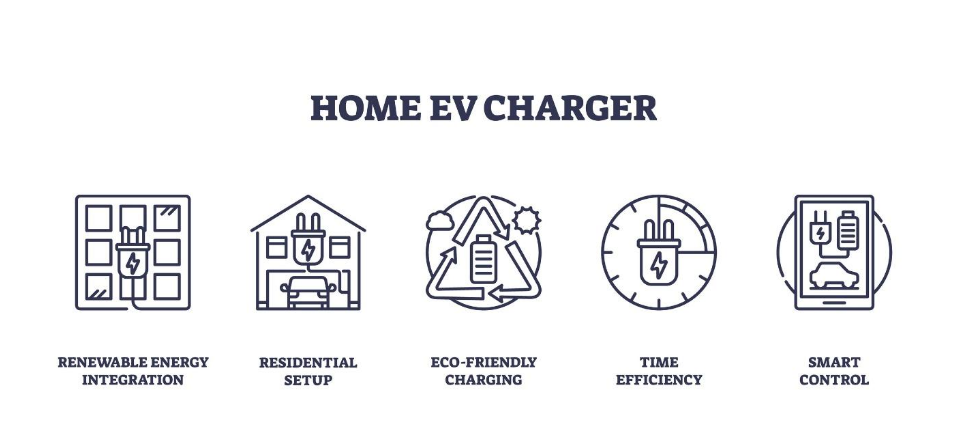
Photo from iStock - Credit: VectorMine
Permits And Local Codes Homeowners Must Know
Most jurisdictions require a permit for home EV charger installation because inspectors verify compliance with local electrical codes. The U.S. Department of Energy guide, “Electric vehicle (EV) charging station local permitting policies,” provides additional context on how local permitting authorities approach EV charging installations. Permit applications may require a breaker schedule, load calculation, and wiring diagram so the inspector can review the proposed dedicated circuit. During the inspection, officials may check grounding connections, breaker selection, wiring, and other installation details. Skipping required permits or inspections can delay final approval and may create complications with future insurance claims.
Local code requirements can affect conduit type, cable sizing, weather protection, and disconnect requirements for indoor or outdoor chargers. Depending on local rules and the equipment, inspectors may require an accessible disconnect near the charger or service equipment. A licensed electrician in Florence, SC can prepare the required permit paperwork and provide equipment specifications and other requested documentation. Complete documentation can help reduce permit revisions and delays.
Some authorities require load documentation when a charger adds significant continuous electrical demand, particularly when an existing service has limited capacity. An electrician can perform the necessary load calculation and provide details about any proposed load management system when required by the permitting authority.
Inspectors may also review safety details such as required GFCI protection, breaker sizing, grounding, and secure cable connections. The exact inspection requirements depend on the equipment, installation method, adopted electrical code, and local authority. A licensed electrician can perform appropriate electrical testing and provide documentation when requested by the inspector.
Dedicated Circuit Requirements for Reliable Daily Charging
A dedicated circuit must match the charger's continuous current rating and include proper breaker type and wire size to prevent overheating. An electrician verifies breaker trip curves and selects wiring based on ampacity and voltage drop for reliable daily use. They also confirm the circuit has its own neutral and grounding conductor where required by the equipment. If the panel lacks a free breaker space, a subpanel may be recommended to host the new dedicated circuit safely.
- Use a breaker sized for the charger's continuous load.
- Install cable sized to handle sustained current without overheating.
- Place the circuit on its own breaker with no other loads.
- Provide proper grounding and bonding for the charger circuit.
Professionals test the circuit after installation with voltage readings and an insulation check to confirm safe operation under load. They monitor for voltage drop at the charger receptacle during simulated charging to ensure the charger receives steady voltage. A continuity test on the grounding conductor confirms a low-resistance path back to the service grounding electrode. Technicians also verify that the junction box and terminations are secure and free of loose conductors.
When older panels show signs of wear, the dedicated circuit installation may require bus bar or breaker replacement to meet safety expectations. Visible signs such as loose breaker handles or overheated bus areas prompt a more thorough panel inspection before adding a charger circuit. During planning, electricians account for future loads to avoid saturating the panel with another large continuous device. Homeowners in Florence, SC should expect a written circuit specification as part of the permit documentation.
For a clear diagnostic before installation, a pro will perform a load test and record current at major feeders to identify headroom and possible sharing conflicts. In a common situation, an electrician sees a tripped main breaker during a simulated charge and then checks individual branch currents to find the overloaded circuit. The pro may recommend moving high-draw appliances to different feeders or adding a load management device if the panel lacks space. Properties in Quinby, SC benefit from this documented testing to support permit approval and inspection.
Why Charging Equipment Fails and When to Call Help
Charging equipment can fail from worn connectors, moisture intrusion, or internal electronics aging, and these failures often show clear signs homeowners can spot. Look for intermittent charging, error lights on the charger, or a burning smell near the plug which indicate immediate risk. A professional will inspect the connector, measure voltage at the outlet, and test the GFCI or AFCI function to confirm the fault. If you see melted insulation or persistent odors, stop using the charger and call a licensed electrician promptly.
Some faults originate at the service panel rather than the charger, such as loose connections or degraded breakers that heat under continuous load during charging. An electrician diagnoses these issues by taking voltage and current readings, checking breaker trip characteristics, and inspecting bus bar condition under load. They may also perform an infrared scan to reveal hot spots not visible to the eye and document readings for repair recommendations. In Florence, SC, timely diagnosis prevents damage that can complicate later permit inspections.
Environmental factors like outdoor exposure and bird or insect nesting can cause connector contamination and control-board failures, so regular visual checks help catch problems early before they affect daily charging. A technician will open the charger enclosure when safe, inspect wiring terminations, and perform insulation resistance tests to confirm moisture has not compromised components. For visible corrosion or water ingress, replacement of compromised parts or the whole unit may be required to restore safe operation. Homeowners should keep the charging area clean and report recurring faults to a pro rather than continuing to use failing equipment.
When diagnosing charging interruptions, a pro follows a stepwise approach: confirm symptoms, isolate the charger circuit, measure voltage under simulated load, and test protective devices like GFCI and AFCI. For example, a homeowner may notice slow charging and tripped breakers, the electrician then measures feeder currents and voltage, checks breaker integrity, and reviews wiring terminations to find the root cause. Written test results, photos, and a recommended action plan help homeowners decide on repairs or replacement. If troubleshooting requires panel work, always hire a licensed electrician to perform repairs and handle any required permits in Quinby, SC.
Safe Level 2 Charger Placement and Ventilation Considerations
Level 2 chargers produce heat at the connector and inside the enclosure during continuous charging, so place units where airflow prevents heat buildup. Avoid tight closets or enclosed garages without cross-ventilation because trapped heat raises internal component temperature and shortens lifespan. A qualified electrician inspects clearance around the charger, checks for obstructing shelving or stored items, and confirms the mounting surface allows air circulation. If installed in a garage, leave several inches of free space around the unit and avoid blocking vents with vehicles or boxes.
Outdoor installations need a dry, sheltered location that keeps direct rain and sun off the charger while allowing airflow around the housing. Mount the unit under an eave or on a covered carport wall so the enclosure stays dry but ventilated during operation. The installer will confirm the chosen height and clearance meet manufacturer guidance and local code for weatherproofing and user access.
Heat can also affect cable and connector condition, so route the cord where it does not rest on hot surfaces or collect near heat sources like water heaters. Inspectors check for sharp bends, abrasion, and proximity to combustible materials that could degrade the cord jacket over time. A professional will test the connector under load and look for elevated temperatures at the plug and terminals using visual checks and temperature probe readings. In a common situation, an electrician finds a tight cable coil against a wall and re-routes it to reduce localized heating and wear.
Proper ventilation pairs with correct circuit protection to reduce fire risk during continuous charging, so ensure GFCI and AFCI devices function and that the charger is on a correctly sized dedicated circuit. Technicians may perform an insulation resistance test and measure temperature rise at terminals during a simulated charge to verify safe operating margins. If the charger goes into thermal fault during testing, the issue could be poor placement, inadequate ventilation, or internal degradation requiring repair.
When to Hire a Professional for Home EV Charger Installation
If your home shows unstable voltage under load or breakers trip only when charging, call a professional to diagnose the circuit immediately. A licensed electrician will take voltage and current readings, inspect breaker trip characteristics, and test grounding conductor continuity. They will also open the panel to look for loose terminations or signs of overheating that are not safe to ignore. Prompt professional diagnosis prevents small electrical issues from becoming larger hazards during daily charging.
- Inspect service panel and breakers.
- Measure voltage under simulated load.
- Test GFCI and AFCI protective devices.
- Check grounding and bonding connections.
- Provide a written diagnostic report.
If your planned charger requires a higher continuous amperage than your panel can support, hire an electrician to evaluate upgrade options and utility coordination. The pro will perform a formal load calculation, document readings, and advise on adding a subpanel or service upgrade when needed. They can also recommend a load management device if that avoids expensive panel work. Your installer will prepare any required permit paperwork for inspection purposes.
When you notice physical damage like melted insulation, discoloration on panel components, or persistent burning odors, stop using the charger and contact a professional right away. Those signs suggest thermal damage that can hide inside breakers, bus bars, or cable terminations and require trained intervention. An electrician can perform infrared scanning, insulation resistance testing, and safe repairs to restore protective device function. After repairs, they document test results for your records and permit inspections.
For first-time home EV charger installation, hiring a professional reduces risk and ensures correct circuit sizing, breaker type, and grounding practice for reliable daily use. A technician will match the charger to a dedicated circuit, verify clearances, and confirm ventilation around the unit per manufacturer guidance. They will also run post-installation tests and provide a written checklist that helps during inspections and future troubleshooting.
Cost Factors, Timeline, and What to Expect During Installation
A typical home EV charger installation timeline starts with an on-site assessment and ends with the final inspection and testing by an inspector. The electrician first documents panel condition, breaker availability, and grounding paths while noting any permit requirements for submission. Permit approval timing varies and can affect scheduling, so expect a delay between application and the start of physical work. During this phase, the technician prepares a written scope and parts list to avoid on-site material runs.
On installation day, electricians isolate power, mount the charger, and run the dedicated circuit from the panel to the charger location using proper conduit and cable supports. They perform torque checks on terminations, label the new breaker, and secure the grounding conductor per best practices. After wiring, the installer energizes the circuit and records voltage and current under simulated load for documentation. These measurements form part of the inspection packet and support reliable daily charging performance.
Inspections usually occur after wiring but before the final cover plates and sealing, allowing the inspector to view connections inside the panel and junction boxes. If the inspector requests changes, the electrician completes corrections and re-requests final approval, which can add time to the project timeline. Expect the inspector to verify breaker sizing, wiring methods, and protective device functions such as GFCI where required. Once approved, the installer completes cosmetic work and performs a final operational test while documenting results for your records.
Costs vary based on panel upgrades, circuit length, conduit complexity, and permit fees, so provide budget flexibility when planning.
For properties in Florence, SC and for homeowners near Quinby, SC scheduling inspections around local office hours can shorten total project duration. A professional will supply a projected timeline and list of potential delays so you know when to expect completion. If unexpected panel repairs appear during the job, the technician explains options and provides a written change order before proceeding. At the end, you receive recorded test readings and a basic operating walkthrough so you understand normal charger behavior and when to call for help.