
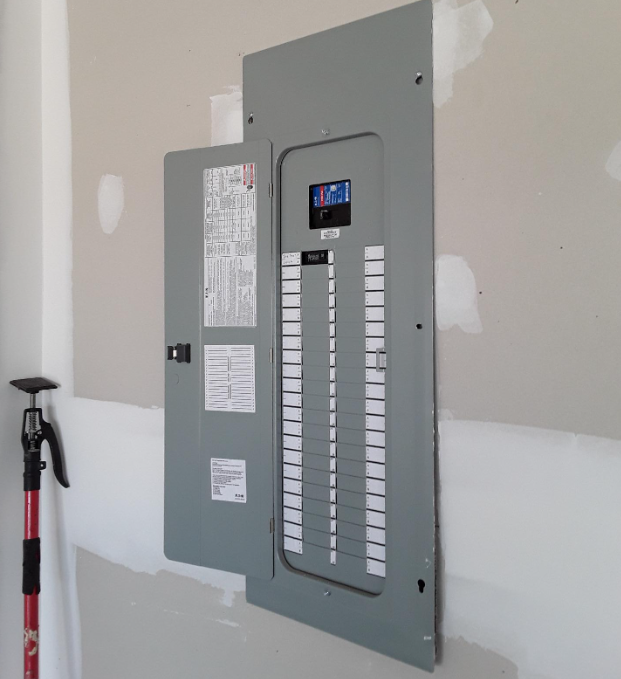
Key Takeaways About AFCI Breaker Upgrades
An AFCI breaker upgrade adds detection that stops dangerous electrical arcs before they start. This information helps homeowners and property managers decide when to seek inspections and upgrades.
- Identify burning smells flicker or scorch marks near outlets.
- Prevent sustained arcing by installing waveform sensitive protection devices.
- Avoid nuisance trips by correcting shared neutral and wiring faults.
- Spot intermittent faults with load testing voltage readings and inspections.
- Reduce fire risk by upgrading circuits or panels when needed.
- Plan inspections and repairs with a licensed electrician and written report.
Introduction
Arc faults are a hidden fire hazard in home wiring that often start small and grow over time. They happen when electricity jumps across gaps in damaged conductors or loose connections. Without the right protection, arcing can ignite wood, insulation, or dust inside walls. Understanding how detection works helps homeowners prioritize upgrades before a small problem becomes a house fire.
AFCI breakers are designed to spot the unique signature of dangerous arcing and interrupt power fast. They compare waveforms and timing to tell normal appliance arcs from hazardous ones. When an AFCI trips, the circuit opens to stop sustained arcing that could cause ignition. Knowing when your panel or circuits need these breakers reduces fire risk and adds measurable safety to older homes.
Homes in Marion, SC with older panels or many shared neutrals can be at higher risk for undetected arc faults. Properties in Woodland Park, SC with renovations or added circuits sometimes lack modern AFCI protection. Visible signs like frequent unexplained breaker trips or scorch marks around outlets deserve attention. A timely electrical inspection can reveal whether upgrades are necessary to address those signs.
Professional diagnosis looks beyond a single trip to find the root cause of arcing and whether an AFCI upgrade will help. An electrician will inspect the service panel, test outlet wiring, and check for loose connections or mixed neutrals. They may use voltage readings and continuity checks to confirm problems and recommend specific circuit or panel changes. Acting on those findings can significantly lower a home’s chance of electrical fire.

Photo from iStock - Credit: Charles Wollertz
How Arc Faults Happen and Why It Matters
How arc faults happen describes when electricity jumps across gaps or breaks in wiring and creates high-energy sparks. These arcs occur at damaged conductors, loose screw terminals, or where insulation is frayed inside walls. A homeowner might notice a burning smell, flickering lights, or outlets that feel warm before an arc grows. These warning signs may indicate an arc flash hazard that requires professional attention. One common homeowner question is whether arcing always causes a breaker trip, sometimes it does not trip without AFCI protection.
- Damaged conductor contact creates continuous sparking.
- Loose connections heat and erode insulation over time.
- Damaged cords and cable abrasion expose conductors.
- Shared neutrals can create unintended arcing paths.
An arc produces rapid changes in current and voltage that differ from normal appliance switching. That difference matters because hazardous arcs can ignite nearby combustible materials inside walls. Professionals look for visible signs like charred insulation, discoloration at outlets, and scorch marks on devices. They also use voltage readings and continuity tests to confirm whether an observed fault is active or intermittent.
Some arcs are intermittent and only happen under load, so they can be hard to reproduce during a basic inspection. For example, when a hair dryer is used in a bathroom and a breaker does not trip, an electrician will run load tests and monitor waveform patterns. For more information about breaker problems, read our guide, tripped circuit breakers? here's your troubleshooting guide.
What AFCI Breaker Upgrades Do for Safety
AFCI breaker upgrades add a detection layer that watches for the electrical signature of dangerous arcing and stops it quickly. These breakers monitor waveform patterns and compare timing to distinguish harmless appliance arcs from sustained, high-energy arcs that can ignite materials. When an AFCI senses a hazardous pattern it opens the circuit to remove power before heat builds enough to start a fire. Upgrading specific circuits to AFCI protection reduces the window when an arc can cause ignition inside walls or junction boxes.
Installing AFCI breakers often pairs with targeted troubleshooting to ensure the protection will work as intended on a circuit. An electrician will inspect junction boxes, check grounding and neutral connections, and test wiring under load to confirm the AFCI sees real-world conditions. They may replace shared-neutral two-wire setups with proper multi-wire branch circuits or add combination devices where needed. These preparatory steps reduce nuisance trips and make the AFCI response more reliable when a true fault occurs.
Beyond stopping arcing, AFCI breaker upgrades can improve overall circuit diagnostics after a trip by providing clearer fault indicators at the panel. Some AFCI models include test buttons and visual indicators that help a pro or homeowner identify the tripped circuit without guessing. Professionals can record voltage readings and continuity results during diagnosis to show whether the trip was caused by a wiring fault or a faulty appliance. This evidence helps prioritize repairs and decide if further upgrades are required for long-term safety.
For homeowners considering upgrades, known signs such as burning odors, recurring unexplained trips, or warm outlets should prompt inspection and discussion of AFCI options with a licensed electrician. In Marion, SC a local inspection will reveal whether branch circuits lack AFCI protection or have wiring issues needing correction. Homes with renovated rooms sometimes require circuit reconfiguration before AFCI installation to avoid shared-neutral conflicts. If you notice repeated symptoms, contact a professional to perform tests, provide a written report, and recommend specific AFCI breaker upgrades.
Where Electrical Code Requires AFCI Protection
Modern electrical codes expand AFCI requirements beyond bedrooms to many living spaces and specific circuits in new and remodeled homes. Local amendments and the latest NFPA guidance influence where protection applies, so check with a licensed electrician for your situation. An electrician will compare your panel layout to current code expectations during an inspection and note circuits that lack AFCI protection. Their written report will list which branch circuits should be upgraded to AFCI breakers based on intended use and room type.
Typical areas where code requires AFCI protection include family rooms, dining rooms, and other living areas that contain general receptacles. Kitchens, laundry rooms, and bedrooms often receive specific attention because cords and appliances increase arc risk in those spaces. During an inspection the electrician will identify multi-wire branch circuits, shared neutrals, and downstream load centers that affect AFCI compatibility. These findings determine whether simple breaker swaps or wiring changes are necessary before installing AFCI devices.
When circuits have shared neutrals, older two-pole breakers, or undersized panels, an electrician may recommend panel or circuit upgrades to install AFCI breakers properly. They will perform continuity checks, voltage readings, and visual inspections of junction boxes to verify neutral separation and proper conductor routing. If wiring faults or mixed neutrals exist, the safe path often requires reterminating neutrals or converting to multi-wire branch circuits first. These preparatory repairs reduce nuisance tripping and ensure AFCI protection works as intended long term.
Homes in Marion, SC undergoing kitchen or bedroom renovations often trigger code-required AFCI updates during permitting and inspection. Properties in Woodland Park, SC with older panels sometimes need two-pole AFCI breakers or a service panel replacement to meet modern protection standards. A professional diagnosis includes simulating loads and recording test results to confirm which circuits will accept AFCI breakers. After diagnosis, the electrician provides upgrade options and a clear sequence of work to meet code and improve safety.
Common Causes of Arc Faults in Homes
Worn or damaged cable sheathing often causes arcs where conductors rub against framing or metal boxes. Rodent chew marks and staples driven too deeply can expose conductors and start intermittent arcing. Loose terminal screws at outlets and switches create heat and tiny gaps that arc under load. Overloaded circuits with aging receptacles can accelerate insulation breakdown and produce sparking over time.
- Damaged cords with exposed wires.
- Loose switch and outlet connections.
- Frayed cable at junction boxes.
- Improperly secured staples or abrasion.
Corroded contacts inside lamp cords or extension cords raise resistance and create local hot spots that arc. Connections in attic spaces loosen with temperature cycles, producing intermittent faults a homeowner might never see. Shared neutral miswiring in renovated rooms can create unexpected current paths that lead to arcing. In Marion, SC properties with older branch circuits, these issues can be more common during amateur renovations.
When diagnosing causes, a professional inspects outlets, junction boxes, and the panel for visual damage and char marks. They will perform voltage readings and continuity tests to confirm loose neutrals or high-resistance connections. An electrician may also use an infrared camera to find hot spots along wiring runs during a loaded test. For guidance on next steps, consider contacting a licensed electrician to review findings and recommend AFCI breaker upgrades or wiring repairs in Woodland Park, SC.
Warning Signs That Mean You Should Act
If you notice a persistent burning smell near an outlet, act promptly because it often indicates overheating or arcing inside the device. Another clear sign is visible discoloration or small scorch marks on faceplates and outlet edges that did not exist before. Repeated tripping of the same breaker, even after reset, suggests a recurring fault that needs diagnostic testing and cannot be ignored. In Marion, SC homeowners should document the timing and conditions of these events before calling an electrician.
Odd timing of trips, such as when certain appliances run together, points to load-related faults or shared-neutral issues that require inspection. Warm or hot receptacles when no heavy appliance runs can indicate loose connections creating resistive heating and intermittent arcing. A buzzing or sizzling sound behind walls when switches operate is an audible sign an electrician will trace during a focused inspection. Note the exact sounds and when they occur to help the professional diagnose the circuit.
Frequent nuisance trips that clear after unplugging appliances may mean a defective cord or device rather than permanent wiring faults, but testing is necessary to confirm. An electrician will isolate the appliance, perform continuity tests, and use voltage readings to see whether the outlet holds expected values under load. They may also open junction boxes to look for loose neutrals and measure resistance across connections to find high-resistance points. For properties in Woodland Park, SC, recording which rooms and times show problems helps prioritize circuits for inspection.
A homeowner seeing intermittent flicker in lights, especially when doors or walls are touched, should suspect loose wiring or backstabbed outlets that arc under movement. A professional diagnosis includes gently wiggling conductors while monitoring voltage and checking tightness at terminal screws to reproduce the fault safely. Electricians sometimes use an infrared camera during a loaded test to reveal hot spots that match the homeowner's observations. If any of these warning signs appear, schedule a licensed electrician to test circuits and discuss AFCI breaker upgrades.
When to Call a Professional for AFCI Breaker Upgrades
Call a licensed electrician in Florence, SC when warning signs persist after simple checks, because hands-on diagnosis often requires circuit isolation and testing equipment. A pro will perform continuity tests and voltage readings to confirm intermittent faults that homeowner checks cannot reproduce. They can open junction boxes and inspect connections under load safely, reducing risk during diagnosis. If you smell burning near an outlet, schedule an inspection promptly rather than attempting more resets yourself.
During a visit, the electrician will use waveform-sensitive testers and may simulate typical appliance loads to see if arcing appears under normal use. They will check for mixed neutrals, improper connector usage, and damaged conductors that need repair before any AFCI breaker upgrades. A written report often accompanies findings, showing voltage readings, continuity results, and recommended corrective actions. This documentation helps you prioritize repairs and understand the scope of required work.
If your panel lacks space or uses obsolete bus connections, a professional will evaluate whether a subpanel or service-panel replacement is necessary to accept AFCI breakers safely. They will measure available load capacity and compare it to expected circuit demands before recommending upgrades. If rewiring is required, the electrician can sequence work to limit outages and avoid creating nuisance trips once AFCI devices are installed.
Ask the professional to demonstrate how they diagnose trips with real-time testing and to show you test results before any work begins. Requesting clear explanations of options, including partial circuit upgrades versus full panel replacement, helps you make informed decisions. If the problem appears intermittent, the electrician may install temporary monitoring to capture fault events over time.
Panel and Circuit Upgrade Options Explained
A common upgrade path is swapping standard breakers for AFCI breakers when the panel has compatible bus stabs and space. An electrician will confirm terminal type and breaker fit before ordering parts to avoid incompatible purchases. If the panel uses tandem or obsolete breakers, the upgrade may require replacing the panel to accept AFCI breaker upgrades safely. That replacement preserves circuit labeling and adds space for future expansion.
- Install single-pole AFCI breakers on individual branch circuits.
- Use two-pole AFCI breakers for multi-wire branch circuits.
- Add a subpanel when main panel lacks spaces.
- Rewire shared-neutral circuits before AFCI installation.
When circuits show mixed neutrals or shared conductors, rewiring those circuits often comes before any AFCI installation. Electricians separate neutrals, reterminate conductors in junction boxes, and verify continuity before fitting AFCI devices. This step reduces nuisance trips and ensures AFCI sensors monitor only the intended circuit. In some homes the work includes rerouting cables in accessible areas to maintain proper conductor grouping.
Load capacity and coordination matter when adding AFCI breakers to older panels because existing service limits can constrain safe additions. A professional will perform a load calculation and review main breaker sizing prior to proposing AFCI breaker upgrades. If the service is near capacity, the options include redistributing loads or upgrading the service panel. Documentation of readings and recommendations helps homeowners plan budget and timing.
Another option is combining AFCI protection with GFCI devices where both hazards exist, using dual-function breakers or downstream receptacle devices. The electrician evaluates locations such as kitchens and laundry areas to decide whether a combination is appropriate. They will test each circuit with waveform-sensitive equipment after installation to confirm proper operation. For homeowners in Marion, SC or Woodland Park, SC this testing gives measurable proof the upgrade reduced arc risk before closing the job.
How Homeowners Can Prevent Arc Faults Daily
Keep cords and appliances in plain view and unplug items when not in use to reduce hidden wear on insulation. Inspect visible cord jackets for frays and replace any damaged extension cords or power strips immediately. Avoid running cords under rugs or through doorways where abrasion and repeated bending cause conductor exposure. If you notice a warm cord or a plug that fits loosely, stop using the device and have it checked.
Secure loose faceplates and tighten terminal screws on outlets and switches to prevent vibration-induced arcing over time. Use screw-term connections rather than backstabbed outlets when replacing devices to improve long-term contact. When replacing receptacles, match the outlet type to the circuit and confirm the neutral and ground terminate correctly. A loose neutral at a device can create intermittent faults that worsen without detection.
Limit adapter and extension cord use by adding permanent receptacles where households need power most frequently to lower reliance on temporary wiring. Consider labeling circuits to track which outlets serve specific rooms and major appliances for easier troubleshooting. Periodically test GFCI devices and AFCI test buttons where present to confirm they still respond as expected. If a test fails, schedule a professional to diagnose wiring and device integrity instead of bypassing protection.
Watch for patterns in when problems occur, noting times, sounds, and what appliances run when symptoms appear to aid diagnosis. For example, a breaker tripping only when the washer and microwave run together suggests a load or shared-neutral issue needing professional review. Document these observations and share them with your electrician during an inspection to speed diagnosis and targeted repairs. Homeowners in Marion, SC and those in Woodland Park, SC can use this information to prioritize circuits for potential AFCI breaker upgrades and wiring fixes.













